Top Tile Manufacturing Regions in India: A Buyer’s Guide
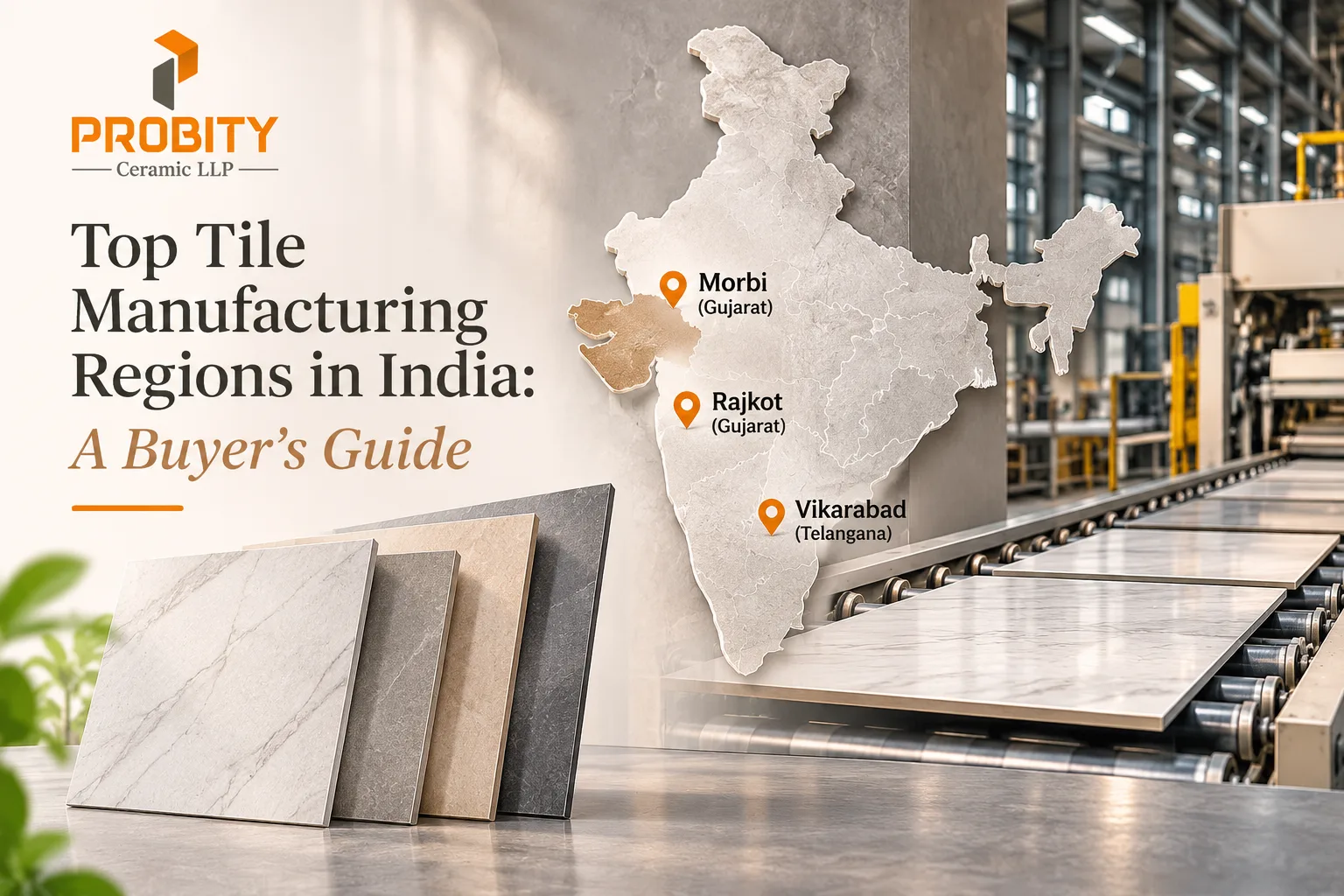
Top Tile Manufacturing Regions in India: A Buyer’s Guide
India has developed a broad ceramic and tile manufacturing ecosystem that serves domestic construction as well as international importers, distributors, wholesalers, retailers, architects and project developers. Yet “buying from India” is not a single sourcing decision. Manufacturing capability, product mix, scale, logistics, technical documentation and supplier systems can differ considerably between clusters—and between factories in the same cluster.
Morbi in Gujarat is the country’s best-known tile manufacturing hub and accounts for a substantial share of India’s ceramic tile output. Other regions also have ceramic, tile, sanitaryware, pottery, technical-ceramic or building-material capabilities. For buyers, the key is to distinguish a major tile-production cluster from a wider ceramic cluster or a trading market.
This guide explains the main regions relevant to tile sourcing, what each may offer, how to evaluate a manufacturer, and how to choose a supplier based on the actual product and destination market. Regional descriptions are starting points for research, not guarantees about an individual factory’s capabilities.
1. Why Manufacturing Region Matters to Tile Buyers
A manufacturing cluster can influence the range of suppliers available, access to raw materials and services, production specialisation, packaging support, freight coordination and the speed with which buyers can compare alternatives. But the location alone cannot establish product quality or reliability.
The best sourcing region is the one that makes it easier to identify a suitable, verifiable supplier—not automatically the one with the largest number of factories.
2. Morbi, Gujarat: India’s Leading Tile Manufacturing Hub
Morbi, in Gujarat’s Saurashtra region, is the most prominent tile manufacturing cluster in India. Government and industry sources describe a large, concentrated ceramic ecosystem with extensive tile production and a significant export orientation. Published estimates of unit counts and production shares vary by year, source and definition; buyers should treat headline figures as approximate rather than as a current factory-level guarantee.
The wider Morbi ecosystem includes manufacturers, raw-material and glaze suppliers, machinery and technical services, packaging providers, logistics operators and industry associations. This concentration can help international buyers compare a broad range of product categories and manufacturing options during a sourcing trip.
Product categories commonly associated with Morbi
Why global buyers consider Morbi
What buyers should verify
Morbi is a cluster, not a single quality grade. Manufacturing technology, quality control, technical documentation, production scale, environmental practices and export experience differ by supplier. Ask to visit the actual factory or arrange an independent inspection; do not assume a showroom, trading office and production facility are the same entity.
For premium or technical applications, verify the exact SKU, test reports, declared tolerances, shade/calibre controls, packaging specification and destination-market requirements. A cluster’s reputation does not replace supplier due diligence.
3. Himmatnagar and the Wider North Gujarat Ceramic Belt
Himmatnagar and other parts of North Gujarat form part of Gujarat’s wider ceramic and industrial ecosystem. Government-supported cluster resources identify Himmatnagar among the state’s ceramic centres. Product capabilities can vary by locality and individual producer, so buyers should research factories directly rather than treating the belt as interchangeable with Morbi.
For buyers, this region may be worth including when a specific manufacturer, product category or commercial relationship is relevant. Verify whether the business is an actual tile producer, a ceramic-product manufacturer, a processor, a distributor or a trading company.
4. Thangadh, Gujarat: A Ceramic Cluster with Different Specialisations
Thangadh is a recognised ceramic cluster in Gujarat, but it should not be described as a direct substitute for Morbi’s broad tile-manufacturing ecosystem. Government cluster information has historically associated Thangadh particularly with pottery, refractories and related ceramic products. Individual businesses may have different specialisations, so buyers seeking floor and wall tiles should confirm product capability before adding a supplier to the shortlist.
Thangadh may be relevant when the procurement brief includes specialist ceramic products or when a named manufacturer has a product that meets the requirement. For mainstream tile imports, buyers should first establish that the supplier actually manufactures the required tile category and format.
5. Rajasthan: Raw Materials, Ceramics and Related Building Surfaces
Rajasthan has important mineral resources and a wider glass, ceramics and building-materials ecosystem. State sources highlight ceramic-related activity across locations including Jaipur, Bikaner, Bhilwara, Abu Road and Bhiwadi, although the mix of products and industrial roles varies. Rajasthan is also strongly associated with stone and marble processing in areas such as Kishangarh; natural-stone processing should not be confused with ceramic tile manufacturing.
For buyers, Rajasthan may be relevant for particular ceramic products, raw-material-linked supply chains, stone surfaces or manufacturers with a defined production capability. If the brief is specifically for mass-produced porcelain or vitrified tiles, verify that the shortlisted facility manufactures those products rather than assuming all regional ceramic or stone businesses do.
Buyer considerations
6. Uttar Pradesh: Khurja and the Broader Ceramic Tradition
Khurja in Uttar Pradesh is a historic ceramic centre known especially for pottery, tableware, whiteware and related ceramic products. Government-backed cluster resources describe its long-standing ceramic tradition and small-scale manufacturing base. That history is important, but it does not mean Khurja is equivalent to Morbi for mainstream floor and wall tile production.
Buyers sourcing decorative ceramic objects, tableware or specialist ceramic products may find Khurja relevant. Buyers seeking construction tiles should verify that the individual company makes the required product and meets the order’s volume, specification and export needs.
The broader North Indian market also contains tile brands, distributors, corporate offices and sales networks. A company’s office in Delhi NCR or another commercial centre does not necessarily indicate that its factory is located there. Ask for the actual production site and clarify whether the supplier is a manufacturer, brand owner, distributor or sourcing intermediary.
7. Andhra Pradesh and Telangana: Emerging and Company-Specific Manufacturing Footprints
Industry disclosures and company announcements point to manufacturing investments in Andhra Pradesh and Telangana, including facilities associated with established tile companies. Andhra Pradesh has also been associated with dedicated ceramic-cluster development. These developments suggest that tile production is not exclusively concentrated in Gujarat, though the scale, product range and supplier density can differ from Morbi.
For buyers, southern facilities may be relevant when a named manufacturer’s product range, regional logistics or project requirements make the location attractive. Do not assume every facility produces every product category, and do not infer capacity or export readiness from a state-level announcement alone.
8. Other Regions: Markets, Specialist Ceramics and Trading Centres
India has additional ceramic and tile-related activity across several states, including manufacturers of sanitaryware, roofing tiles, refractories, pottery, technical ceramics and other products. Some cities are major tile consumption, distribution or import markets rather than major production clusters. These roles can be commercially useful but should not be conflated.
For a global buyer, a trading company may still be a suitable partner if it offers transparent factory identification, strong quality assurance, consolidated sourcing and clear contractual accountability. The critical issue is not the label alone; it is whether the supplier’s role, controls and responsibilities are understood and documented.
9. Regional Overview: Where Should Buyers Start?
| Region or cluster | Known role / sourcing context | Best buyer approach |
| Morbi, Gujarat | India’s leading, highly concentrated tile manufacturing hub | Start here for broad comparisons across many tile categories; shortlist and verify factories individually |
| Himmatnagar / North Gujarat | Part of Gujarat’s wider ceramic ecosystem | Investigate specific manufacturers and confirm exact tile capability |
| Thangadh, Gujarat | Ceramic cluster with historical strengths in pottery, refractories and related products | Use for relevant specialist products; verify mainstream tile capability before sourcing |
| Rajasthan locations | Ceramics, minerals, natural stone and related building-surface activities | Distinguish ceramic tiles from natural stone and other surfaces; verify the actual plant |
| Khurja, Uttar Pradesh | Historic ceramic centre, especially pottery, tableware and whiteware | Relevant to those product categories; verify construction-tile production if required |
| Andhra Pradesh / Telangana | Manufacturing footprints and developing cluster activity, including company-specific facilities | Research named plants, product range, capacity and export systems |
| Other cities and regions | Mix of manufacturers, specialist producers, brand offices and trading markets | Identify whether the entity manufactures, processes, distributes or sources the product |
This is a qualitative sourcing guide, not a ranking of every Indian manufacturer. Facilities and investment plans change; verify current information before making procurement decisions.
10. How to Choose the Right Region for Your Product
Begin with the specification rather than the map. A buyer looking for 300×600 mm ceramic wall tiles has a different sourcing brief from one buying 1200×2400 mm porcelain slabs, heavy-duty parking tiles or products for a regulated commercial project.
| Procurement requirement | What to establish before choosing a region |
| Ceramic wall tiles | Available sizes, surface finish, shade range, order volume and packing |
| Vitrified / porcelain floor tiles | Product category, water absorption, wear and strength data, dimensions and finish |
| Large-format slabs | Maximum dimensions, thickness, flatness, edge protection, handling and fabrication guidance |
| Outdoor / parking tiles | Declared intended use, slip characteristics, strength, weather and frost suitability where relevant |
| Private label / OEM | Custom packaging, design control, minimum order, artwork approvals and repeatability |
| Project supply | Consistent batches, project schedule, mock-up approval, inspection and replacement plan |
| Export distribution | Destination-market documents, pallet/container packing, lead time, claims handling and logistics |
A supplier in the most convenient cluster is not necessarily the best choice if it cannot meet the exact specification. Conversely, a more distant plant may be worthwhile if it offers stronger product fit or documented quality systems.
11. Manufacturer, Brand Owner or Trading Company?
In a concentrated cluster, buyers may encounter factories, brand owners, export houses, sourcing agents and traders. Each model can work, but the buyer should understand who controls production and who is accountable for conformity.
The supplier’s legal name, invoice entity, bank beneficiary, factory identity and contractual responsibility should be consistent and independently verified. Be cautious when a supplier will not disclose the production source for a product where factory verification is material to the purchase.
12. A Practical Factory Due-Diligence Checklist
For significant orders, consider pre-shipment inspection. An inspection plan should define the sampling method, checks, defect classifications and reporting process before production is complete.
13. Quality, Certification and Compliance: Avoid Assumptions
“Export quality”, “premium” and “international standard” are not complete specifications. Quality requirements should be defined through the exact product, intended application, relevant standard, test method, acceptable tolerances and agreed inspection criteria.
Standards and certification requirements vary by country and application. Seek qualified compliance advice where necessary; do not rely on a supplier’s generic statement alone.
14. Logistics: Factory Location Is Only One Cost Variable
A factory’s region influences inland transport and the practical process of consolidating or shipping goods, but it does not by itself determine total landed cost. Compare the complete commercial offer.
For Morbi-based exporters, port and inland logistics are often part of the supplier’s established export workflow. Still, obtain a shipment-specific quote and confirm who arranges each step under the agreed Incoterm. Do not assume the same route or price applies to every order.
15. How to Compare Two Suppliers Fairly
Supplier comparisons are only meaningful when the products and terms are comparable. A low quotation may refer to a different thickness, finish, calibre, packaging standard, technical performance or level of service.
| Comparison point | Questions to ask |
| Product specification | Are type, size, thickness, finish, edge and application identical? |
| Technical evidence | Are test methods and reported values comparable? |
| Sample | Has each supplier’s exact SKU been approved? |
| Shade and calibre | How is batch consistency identified and controlled? |
| Quantity and yield | Are box quantities, area, breakage allowance and waste assumptions equivalent? |
| Packaging | Are carton, pallet, crate and loading protections comparable? |
| Delivery | Are production lead time, port, Incoterm and shipment window the same? |
| Risk terms | Are inspection rights, claims deadlines and remedies equally clear? |
| Repeat supply | Can each supplier provide the same specification in future orders? |
Score the evidence, not just the sales presentation. A supplier who answers technical questions clearly and documents commitments may be more dependable than one offering only a lower initial price.
16. Common Sourcing Mistakes
17. What Global Buyers Should Know About Probity Ceramic LLP
Probity Ceramic LLP is positioned as an India-based ceramic and porcelain tile manufacturer/exporter, serving international buyers looking for tile and slab collections. When evaluating Probity—or any shortlisted supplier—buyers should verify the exact manufacturing location, product SKU, current availability, technical data and export terms relevant to their order.
For a product enquiry, request the current catalogue, product-specific samples, size and thickness details, finish information, relevant technical documents, packaging specification, minimum order quantity, production lead time and export quotation. For private-label or distributor arrangements, discuss packaging artwork, batch identification, quality acceptance, inspection and repeat-order planning.
A strong sourcing relationship is built on transparent product information, documented requirements and clear accountability—not on regional reputation alone.
18. Step-by-Step Sourcing Plan
19. Final Verdict: Which Indian Region Is Best for Tile Sourcing?
For buyers seeking a broad choice of ceramic, vitrified and porcelain tile manufacturers, Morbi, Gujarat is usually the most practical starting point because of its scale and concentration of tile production. However, the right supplier is not selected by geography alone. Himmatnagar and other Gujarat locations, specialist ceramic centres such as Thangadh and Khurja, Rajasthan’s ceramic and surface-material ecosystem, and company-specific facilities in southern India may be relevant for particular products or sourcing strategies.
The most reliable approach is to define the specification first, identify regions that actually manufacture the required product, verify the factory, compare equivalent samples and technical evidence, and document the quality and delivery requirements before ordering.
In short: use the region to build your shortlist, and use product fit, verifiable quality, export readiness, total landed cost and contractual accountability to make the final decision.
Frequently Asked Questions
Which is the largest tile manufacturing region in India?
Morbi in Gujarat is widely recognised as India’s leading tile manufacturing cluster. Published estimates of factory counts and output share vary by source, year and definition, so buyers should verify current figures when citing them.
Why is Morbi important for tile importers?
Morbi has a concentrated ecosystem of tile factories and supporting suppliers, giving buyers opportunities to compare products, manufacturers and commercial terms. Supplier capability still needs to be verified individually.
Are all Morbi tiles export quality?
No. Quality, technical performance, packaging and export systems vary by factory and product. Buyers should define specifications, review product-specific evidence and arrange inspection when appropriate.
Is Khurja a major floor and wall tile manufacturing hub?
Khurja is especially known for its historic ceramic, pottery, tableware and whiteware industries. Buyers seeking construction tiles should verify that a specific supplier manufactures the required tile type.
What is the difference between a manufacturing cluster and a trading hub?
A manufacturing cluster has production facilities and related industrial suppliers. A trading hub may primarily contain distributors, showrooms, brand offices or importers. Some locations have both roles.
Should I buy directly from a manufacturer or through an exporter?
Either can work. Direct buying may provide greater factory visibility; an experienced exporter or sourcing partner may help with consolidation, documentation and coordination. Verify accountability and contract terms.
How do I verify that a supplier owns a factory?
Request the legal entity and factory address, arrange a site visit or qualified inspection, confirm the production line for the specified product and ensure the contract identifies who is responsible for conformity.
Which region is best for porcelain slabs?
Start with manufacturers that demonstrably produce the required slab dimensions and thickness. Morbi is a logical first research point, but verify the specific plant’s format capability, handling, flatness, packing and application data.
What should I request before placing a bulk tile order?
Request an exact SKU specification, approved sample, technical data, relevant test reports, shade/calibre details, packaging plan, lead time, inspection terms and written claims procedure.
How can I compare tile suppliers fairly?
Compare the same product type, size, thickness, finish, technical performance, packaging, quantity, delivery terms and acceptance criteria. Then assess the supplier’s evidence and reliability.
Does a factory’s location affect landed cost?
It can affect inland transport and logistics, but landed cost also depends on product price, port route, freight, duties, insurance, packaging, handling and contract terms.
Can Probity Ceramic LLP support international buyers?
Interested buyers should contact Probity for its current catalogue, product-specific technical details, samples, export packaging information, lead times and quotation, then verify suitability for the destination market.
Related Articles

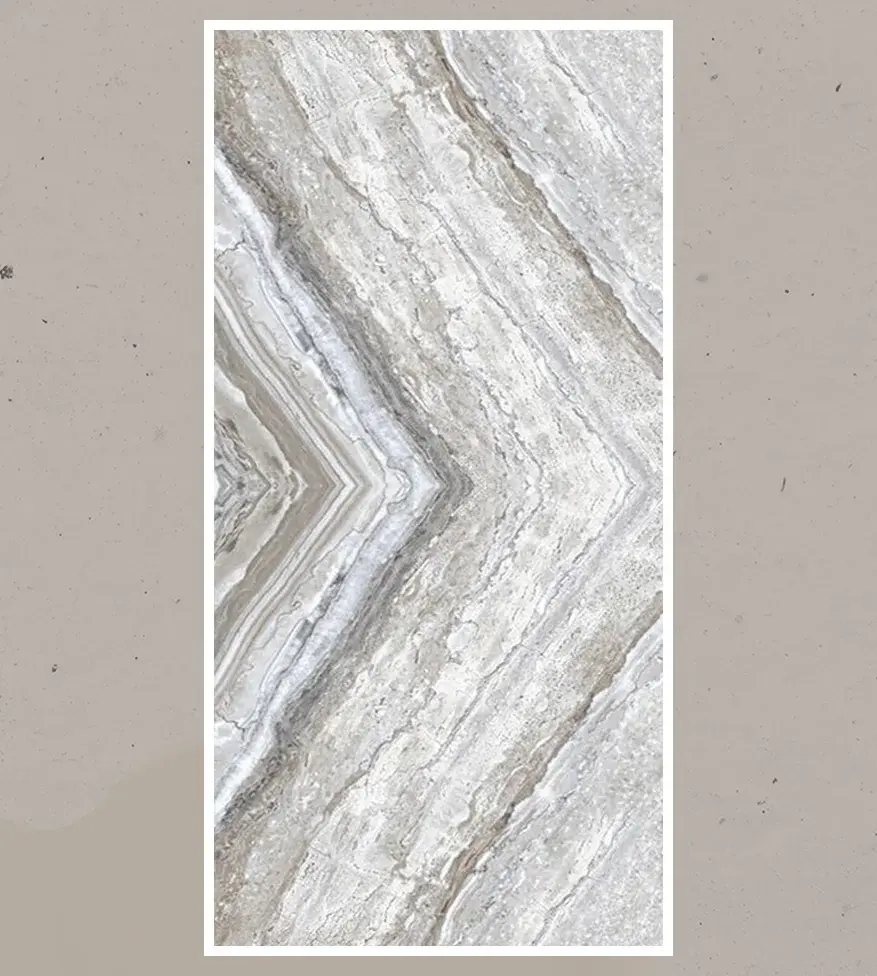
Bookmatched Marble Look Porcelain: The New Statement Surface

600×1200 vs 800×1600 vs 1200×2400 Tiles: Which Size Is Right?