Style & Design
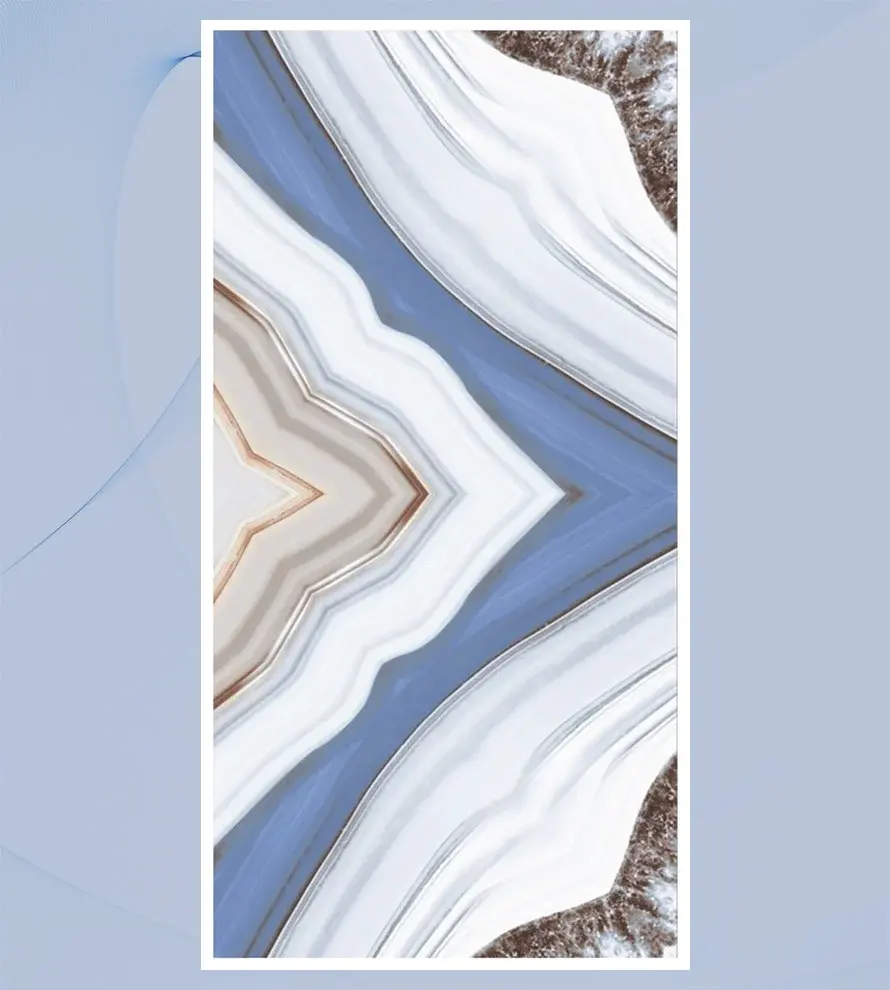
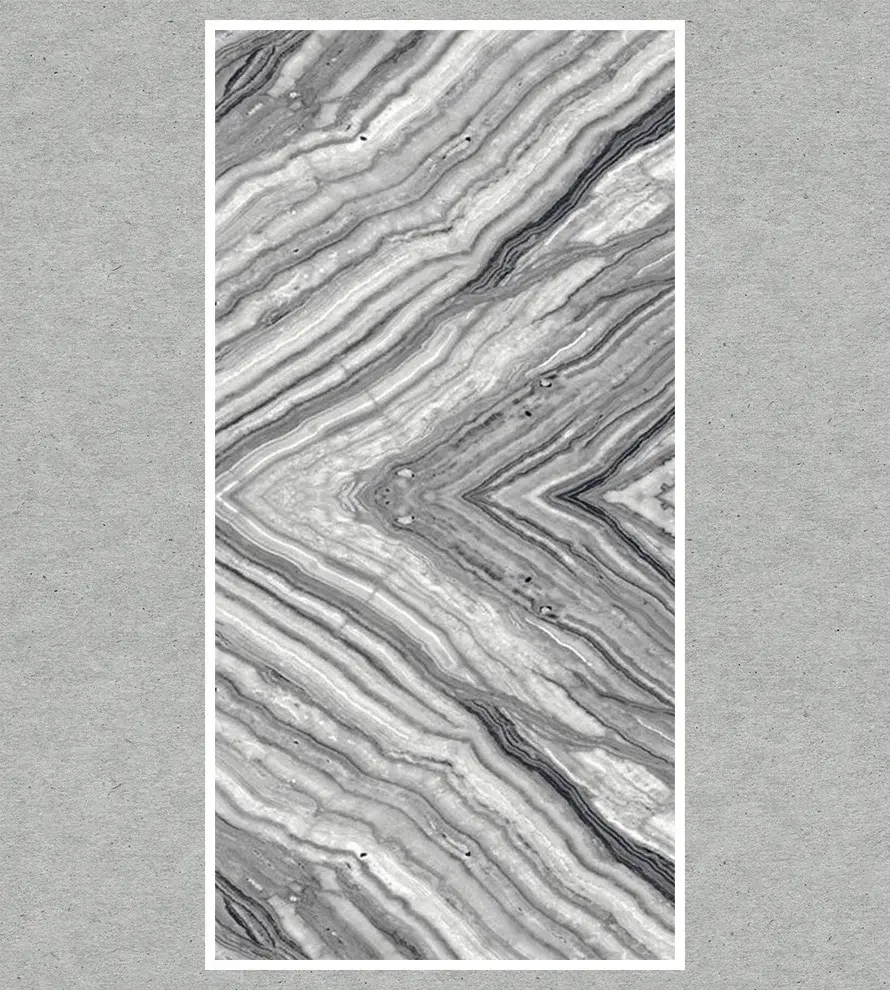
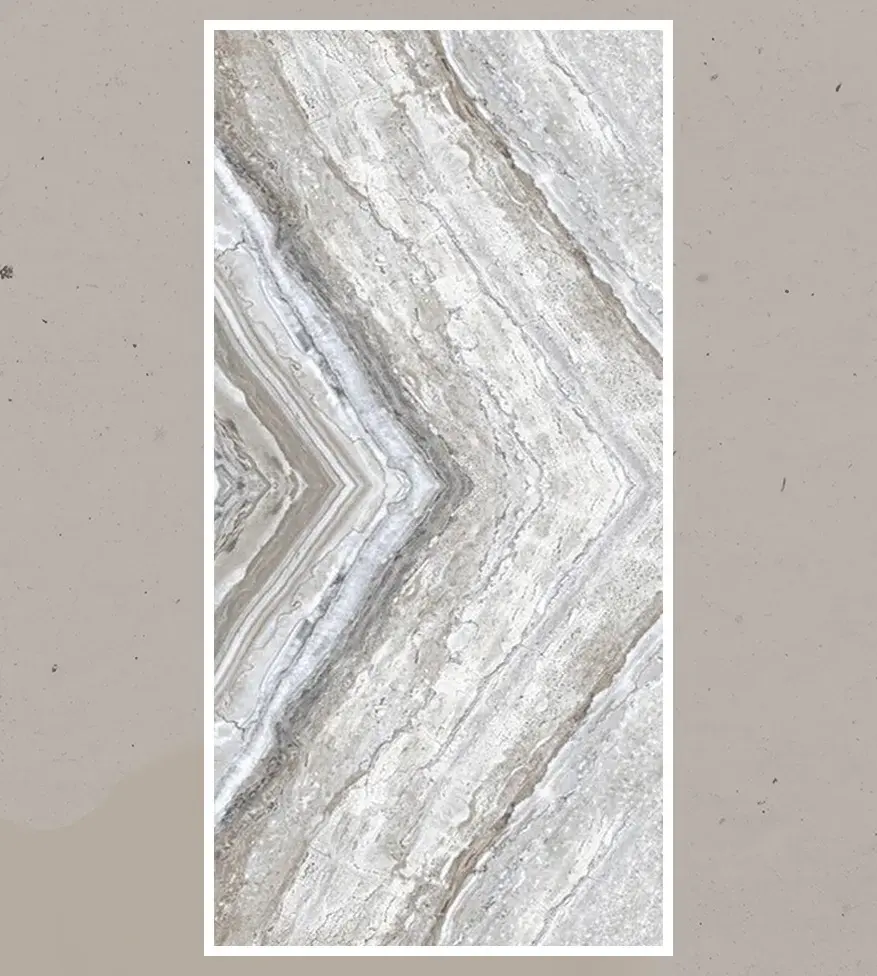
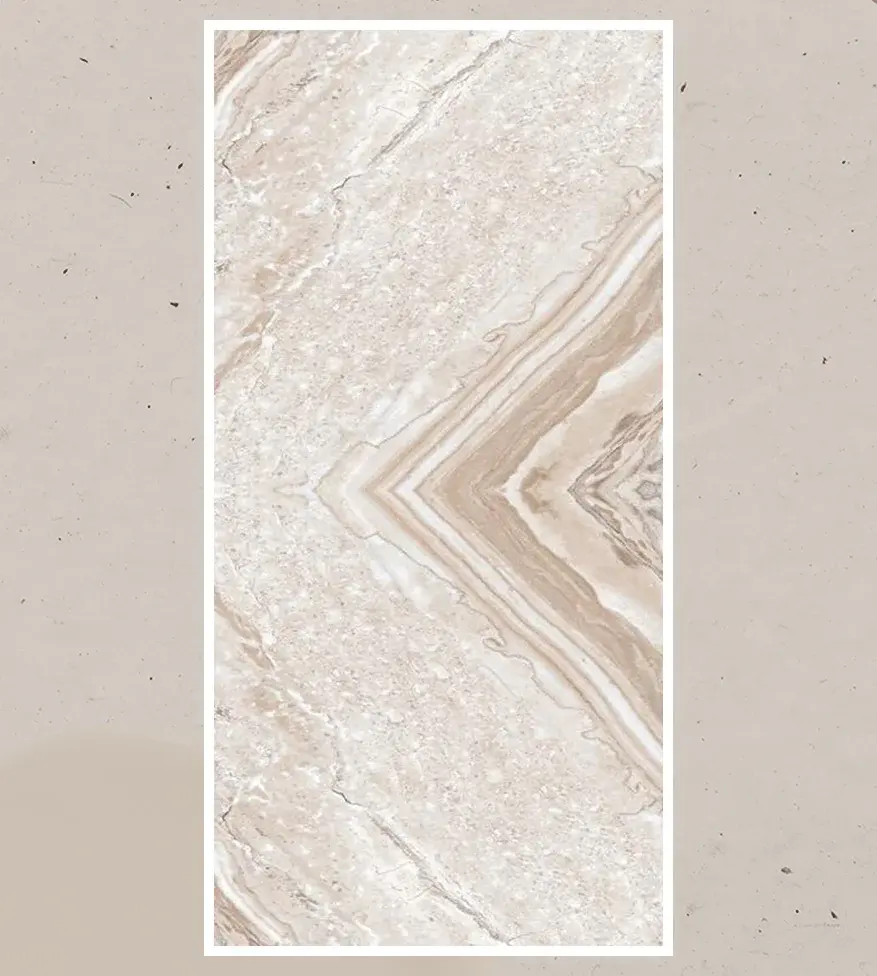
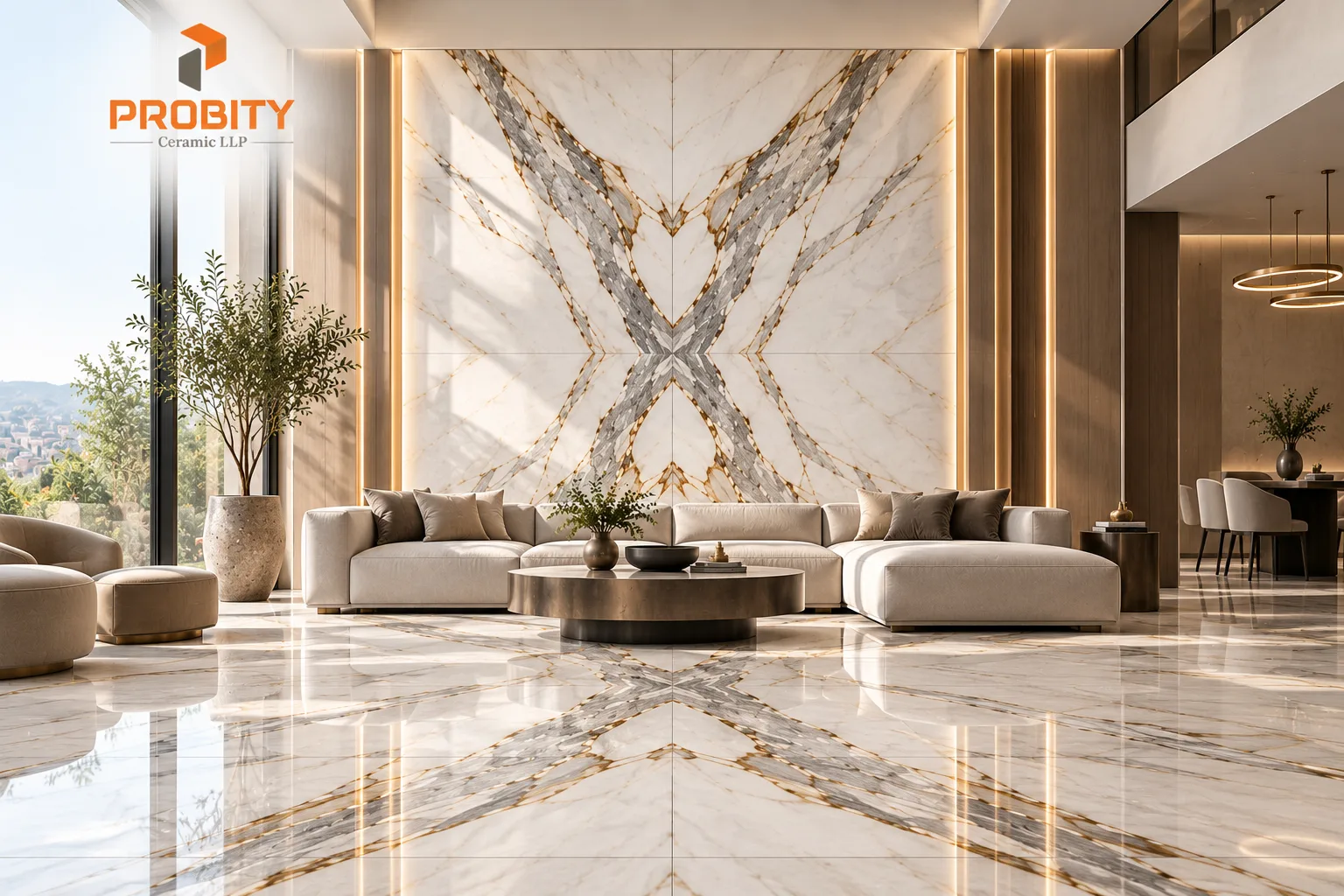
Bookmatched Marble Look Porcelain: The New Statement Surface
Related Articles
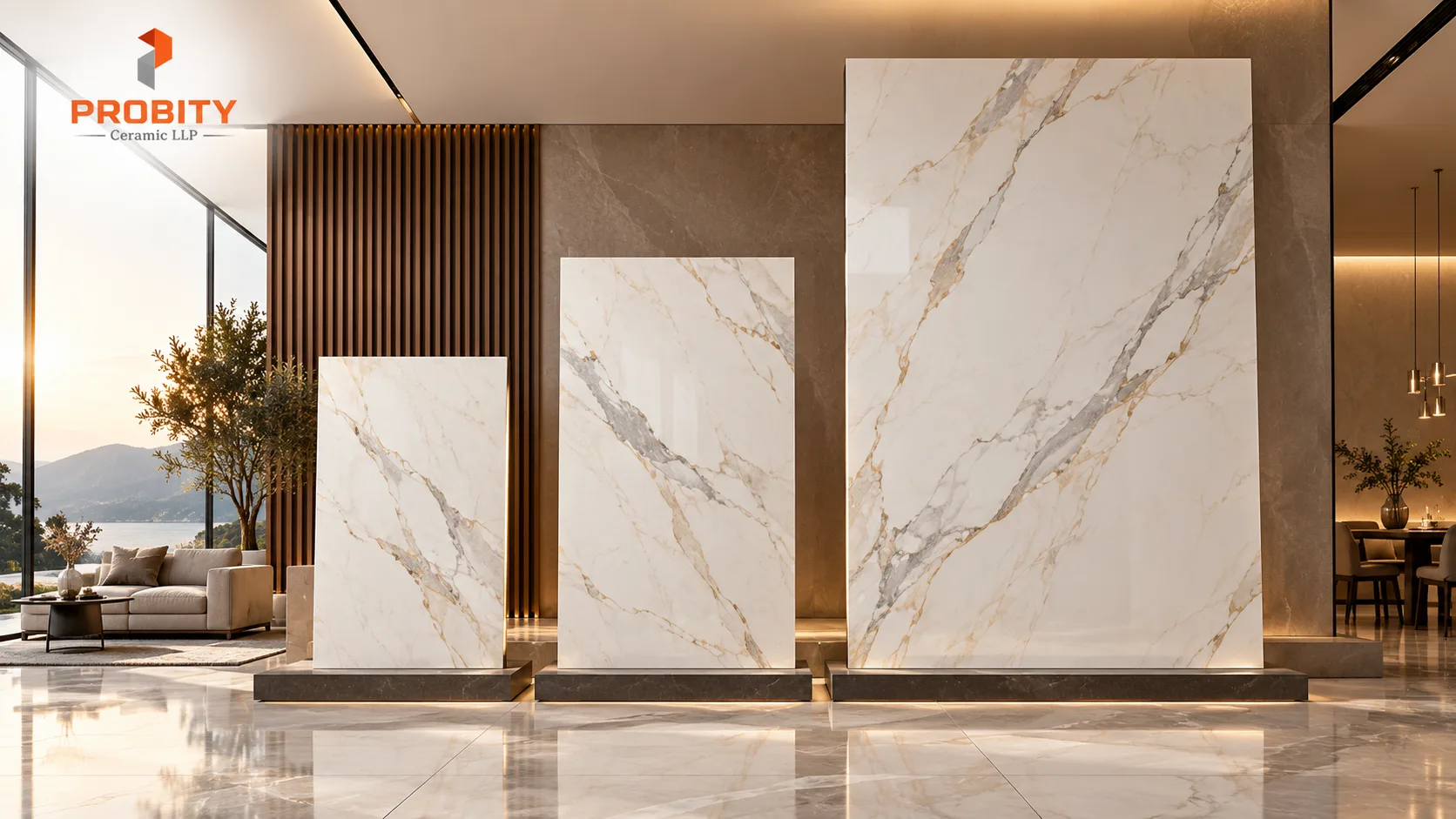
600×1200 vs 800×1600 vs 1200×2400 Tiles: Which Size Is Right?
600×1200 vs 800×1600 vs 1200×2400: Choosing the Right Tile Size
When selecting porcelain tiles for a project, colour, finish and design usually receive the most attention. But there is another decision that can significantly change the appearance, installation process and overall practicality of a project: tile size.
A 600×1200 mm tile can create a clean, contemporary appearance with relatively manageable handling. An 800×1600 mm format takes the large-format concept further, providing greater visual continuity and fewer joints. A 1200×2400 mm porcelain slab can create an even more dramatic architectural surface with significantly fewer visible joints.
However, larger does not automatically mean better. The right format depends on the application, room dimensions, design pattern, substrate, handling equipment, installation expertise, logistics, fabrication requirements and the exact product specification.
Probity's porcelain range covers multiple formats, including 600×1200 mm and larger slab formats. Its catalogue also includes larger formats such as 800×2400, 800×3000 and 800×3200 mm. Exact SKU availability should always be verified before an export order.
1. Why Tile Size Matters More Than You Think
Tile size affects much more than the number of tiles required. It influences:
• Number of grout joints• Visual continuity• Perceived room size• Vein continuity in marble-look designs• Installation speed• Handling requirements• Cutting and wastage• Packaging and logistics• Substrate preparation• Labour requirements• Design flexibility• Project economics
A marble-look design with dramatic veining may look fragmented when divided across many smaller pieces. The same pattern can appear considerably more architectural when produced across a larger surface.
Therefore, tile size should be selected after considering the complete project, rather than choosing the largest available format simply because it looks premium.
2. Understanding the Three Formats
FormatApprox. Area per PieceGeneral Category600×1200 mm0.72 m²Large-format porcelain tile800×1600 mm1.28 m²Larger-format porcelain tile1200×2400 mm2.88 m²Large porcelain slab
A single 1200×2400 mm slab covers four times the area of a 600×1200 mm tile. That can dramatically reduce visible joints, but it also means the piece becomes more demanding to transport, move, cut and install.
This is why large-format porcelain should be considered a complete installation system rather than simply a bigger tile.
3. 600×1200 mm: The Versatile Large-Format Choice
The 600×1200 mm format offers a useful balance between large-format appearance, manageable installation and broad application flexibility. Probity currently offers several porcelain products in this format, including Calacatta Gold, Calacatta Alpine and Satuvario Smart.
For flooring applications, explore Probity’s porcelain floor tiles to see the broader range of formats and designs.
Why choose 600×1200?
• Fewer joints than traditional smaller tiles.• Broad application flexibility across residential and commercial interiors.• More manageable handling than very large slabs for many projects.• Excellent proportion for marble-look designs.• Practical for scalable residential and commercial specifications.
Best suited for
• Living rooms• Bedrooms• Corridors• Bathrooms• Feature walls• Kitchens• Hotel interiors• Retail interiors• Office spaces
4. 800×1600 mm: When You Want More Visual Continuity
Moving from 600×1200 to 800×1600 changes the visual character of the installation. The surface becomes larger, the number of joints decreases and large-scale patterns have more room to develop.
An 800×1600 tile covers approximately 1.28 m², compared with approximately 0.72 m² for a 600×1200 tile. That is roughly 78% more surface area per piece.
Where 800×1600 can make sense
• Large living rooms• Luxury residential interiors• Hotel floors• Lobby areas• Large commercial interiors• Feature walls• Retail environments• Open-plan spaces
The trade-off
Buyers should evaluate weight per piece, installer capability, handling equipment, site access, substrate flatness, cutting equipment, storage, packaging and transportation.
5. 1200×2400 mm: The Architectural Slab Approach
The 1200×2400 mm format moves further toward the porcelain slab category. At approximately 2.88 m² per piece, one slab covers four times the area of a 600×1200 tile.
This is where the objective often shifts from simply creating a large-format floor to creating an architectural surface with minimal visual interruption.
For slab-oriented applications, see Probity’s porcelain slabs and kitchen tops.
Potential applications
• Feature walls• Hotel lobbies• Luxury residential interiors• Reception areas• Commercial walls• Bathroom feature surfaces• Vanity applications• Furniture and architectural elements• Selected kitchen applications, subject to exact product specification
The biggest advantage: visual continuity
The primary attraction of a 1200×2400 slab is not simply its size. It is the reduction in visual interruptions. With smaller pieces, grout joints and tile boundaries break the visual field. A larger slab can create a much more continuous marble-inspired surface.
Suitability for a floor, wall, countertop or fabricated application must be confirmed against the exact technical specification, thickness, support structure and manufacturer guidance.
For wall applications where a large uninterrupted surface is desired, Probity’s porcelain wall tiles category is another useful reference.
6. 600×1200 vs 800×1600 vs 1200×2400: Direct Comparison
Factor600×1200800×16001200×2400Approx. area/piece0.72 m²1.28 m²2.88 m²Visual continuityHighVery highExtremely highGrout jointsModerateFewerMinimalHandlingMore manageableMore demandingHighly demandingInstallation complexityModerateHigherHighDesign flexibilityExcellentVery goodProject-dependentResidential suitabilityExcellentExcellent for larger spacesSelectiveCommercial suitabilityExcellentExcellentExcellent for suitable applicationsFeature wallsExcellentExcellentExcellentLarge open spacesVery goodExcellentExcellentLogistics complexityLowerModerateHigherSpecialist handlingUsually less demandingOften beneficialGenerally importantBest strengthVersatilityBalance of scale and continuityMaximum visual impact
This is a planning guide, not a technical approval matrix. The suitability of any particular tile or slab depends on its exact technical specification, thickness, surface, application and installation system.
7. Which Size Creates the Fewest Grout Lines?
Larger tile generally means fewer pieces and fewer joints. For a 12 m² surface, a simple area comparison gives approximately:
• 600×1200: about 17 pieces• 800×1600: about 10 pieces• 1200×2400: about 5 pieces
This is an illustration of surface coverage, not an actual installation take-off. Real quantities depend on room dimensions, layout, cuts, orientation, expansion requirements and wastage.
The reduction in joints can make large-format tiles attractive for minimalist interiors, luxury bathrooms, large living rooms, hotel lobbies and premium retail environments.
8. How Room Size Should Influence Your Tile Selection
A common mistake is choosing tile size independently of room dimensions. Instead, think about proportion.
Smaller or medium rooms
A 600×1200 format can provide a strong balance and a modern large-format appearance without making handling unnecessarily complicated.
Large open-plan rooms
800×1600 can create a more expansive visual rhythm and complement open-plan living rooms, large hotel rooms, commercial floors and large retail areas.
Large feature surfaces
1200×2400 or other slab formats can become particularly compelling when the goal is a dramatic uninterrupted wall or architectural surface.
The important question is not, 'What is the biggest tile available?' Instead ask, 'What format creates the right visual proportion for this surface while remaining practical to install?'
9. Marble-Look Tiles: Size Becomes Even More Important
Tile size has an especially strong influence on marble-look porcelain. Calacatta typically uses dramatic veins and stronger contrast; Statuario offers refined grey movement across a bright background; Carrara is generally softer and more understated.
A small format may interrupt these patterns frequently. A larger format gives the digitally developed design more space to develop.
For projects comparing different surface categories, Probity’s quartz slabs can also be considered alongside porcelain when evaluating architectural surface options.
For dramatic designs, buyers should ask manufacturers about:
• Number of faces• Random versus coordinated patterns• Vein direction• Endless designs• Bookmatching availability• Face variation• Matching between batches• Recommended layout
10. Don't Choose a Large Format Without Checking Installation Requirements
Large-format porcelain is visually impressive, but it requires greater attention to installation.
• Substrate flatness: larger pieces are less forgiving of uneven substrates.• Handling: the installation team must be able to safely move and position the pieces.• Cutting: large pieces may require suitable professional cutting equipment.• Adhesive coverage: the installation system should be appropriate for the exact product and application.• Joint design: follow the manufacturer's recommended joint width.• Access: check doorways, staircases, elevators, corridors and storage areas.
A slab that fits perfectly into the design may become a logistical problem if it cannot reach the installation area safely.
11. Tile Size Also Changes Your Procurement Strategy
For importers, distributors and project developers, tile size is also a supply-chain decision.
• Pieces per box• Area per box• Boxes per pallet• Pallet dimensions• Container loading• Gross weight• Breakage risk• Packaging requirements• MOQ• Production lead time• Replacement requirements
Before placing a bulk order, compare the complete landed project cost rather than only the price per square metre.
12. What About Wastage?
Larger tiles do not automatically mean lower wastage. The result depends heavily on the dimensions of the actual room.
Large formats can be highly efficient on appropriately sized surfaces, but cutting large slabs around doors, windows, columns, niches and corners can generate significant offcuts.
For large-format projects, prepare a cutting and layout plan before placing the final purchase order.
13. Which Size Is Best for Different Projects?
Project TypeRecommended Starting PointStandard residential interiors600×1200Large luxury homes600×1200 / 800×1600Large living rooms800×1600Hotel bedrooms600×1200 / 800×1600Hotel lobbies800×1600 / large slabsRetail interiors600×1200 / 800×1600Large feature walls800×1600 / 1200×2400Luxury bathroom walls600×1200 / large slabsArchitectural feature surfacesLarge slabsMinimal-joint interiors800×1600 / 1200×2400Highly detailed layouts600×1200
These are design-planning starting points rather than technical specifications. The exact product must be approved for its intended application.
14. The Right Size Is a Balance of Five Factors
1. Surface — How large and geometrically complex is the installation area?2. Design — Does the tile have subtle or dramatic movement?3. Installation — Does the project team have experience with the selected format?4. Logistics — Can the product be transported and handled efficiently?5. Economics — Does the total installed cost make sense?
This produces a much better decision than simply asking, 'Which tile size is most premium?'
15. A Simple Decision Framework
Choose 600×1200 when:
You want versatility, easier project planning and a large-format appearance without moving too far into specialist slab installation.
Choose 800×1600 when:
You want greater visual scale and fewer joints while still working with a relatively modular format.
Choose 1200×2400 when:
The project prioritizes maximum visual continuity and architectural impact, and the site, installation team and logistics are equipped to handle large slabs.
16. What Importers and Distributors Should Ask the Manufacturer
1. Which designs are available in each size?2. Is the same design available across multiple formats?3. What are the exact dimensions and thickness?4. Is the product rectified?5. What is the water absorption?6. What slip-resistance rating applies?7. What surface finish is available?8. How many faces/pattern variations are available?9. Are matching slabs available?10. What is the MOQ by size and design?11. What is the production lead time?12. How is the product packaged?13. What is the loading capacity?14. What quality documentation is available?15. Can private-label packaging be supplied?16. Can mixed sizes/designs be loaded in one container?
17. 600×1200 vs 800×1600 vs 1200×2400: The Final Verdict
There is no universal winner. Each format solves a different project problem.
600×1200 mm is the versatile choice. It provides a modern large-format appearance while remaining practical across a broad range of residential and commercial applications.
800×1600 mm is the scale-and-continuity choice. It works particularly well when the designer wants fewer joints and a more expansive visual surface.
1200×2400 mm is the architectural-impact choice. It is most compelling when large uninterrupted surfaces, dramatic marble movement and minimal joints are central to the design — provided the installation and logistics infrastructure can support it.
The smartest specification is therefore not: 'Choose the biggest tile.' It is: 'Choose the largest format that makes sense for the design, application, installation capability and project economics.'
18. Final Buyer Checklist
• Room/surface dimensions• Desired visual effect• Tile/slab format• Exact thickness• Surface finish• Rectification• Water absorption• Slip resistance• Wear requirements• Number of design faces• Vein direction and variation• Installation method• Handling requirements• Site access• Cutting requirements• Expected wastage• Packaging• Container loading• MOQ• Production lead time• Replacement availability• Technical documentation
Frequently Asked Questions
1. Is 600×1200 considered a large-format porcelain tile?
Yes. 600×1200 mm is widely used as a large-format porcelain size and provides fewer joints than many traditional smaller formats.
2. Is 800×1600 better than 600×1200?
Not necessarily. 800×1600 provides more coverage per piece and fewer joints, but it can require more careful handling and installation. The better choice depends on the project.
3. Is 1200×2400 a porcelain slab?
It is generally treated as a large slab format rather than a conventional modular tile. The exact classification and suitability should be confirmed with the manufacturer for the specific product.
4. Which tile size gives the fewest grout lines?
Of these three formats, 1200×2400 produces the fewest joints because each piece covers approximately 2.88 m².
5. Which size is best for marble-look porcelain?
There is no single answer. 600×1200 can provide a practical balance, while 800×1600 and 1200×2400 can showcase large-scale marble veining with greater continuity.
6. Are large-format tiles harder to install?
They can be. Larger pieces generally require greater attention to substrate preparation, handling, positioning, cutting and installation technique.
7. Are 1200×2400 slabs suitable for floors?
Potentially, depending on the exact product, thickness, surface, application and manufacturer's technical approval. Buyers should never assume that every slab is suitable for every floor application.
8. Which size is best for hotel projects?
600×1200, 800×1600 and large slabs can all work in hospitality projects. The decision should be based on the specific area and the project's installation requirements.
9. Does a larger tile reduce wastage?
Not automatically. Wastage depends on the dimensions and complexity of the installation area.
10. Can the same design be supplied in multiple sizes?
Some collections are available across multiple formats, but this depends on the specific design and manufacturer.
11. What should I check before importing large-format porcelain from India?
Check exact dimensions, thickness, technical specifications, packaging, MOQ, container loading, production lead time, quality documentation, installation requirements and replacement availability.
12. Can Probity supply porcelain tiles for OEM or private-label brands?
Probity's published product information indicates OEM/private-label packaging support for export products. Exact customization, MOQ and format availability should be confirmed with the export team for the selected collection.
Living Room Floor Tiles Design: 15 Ideas for Your Space
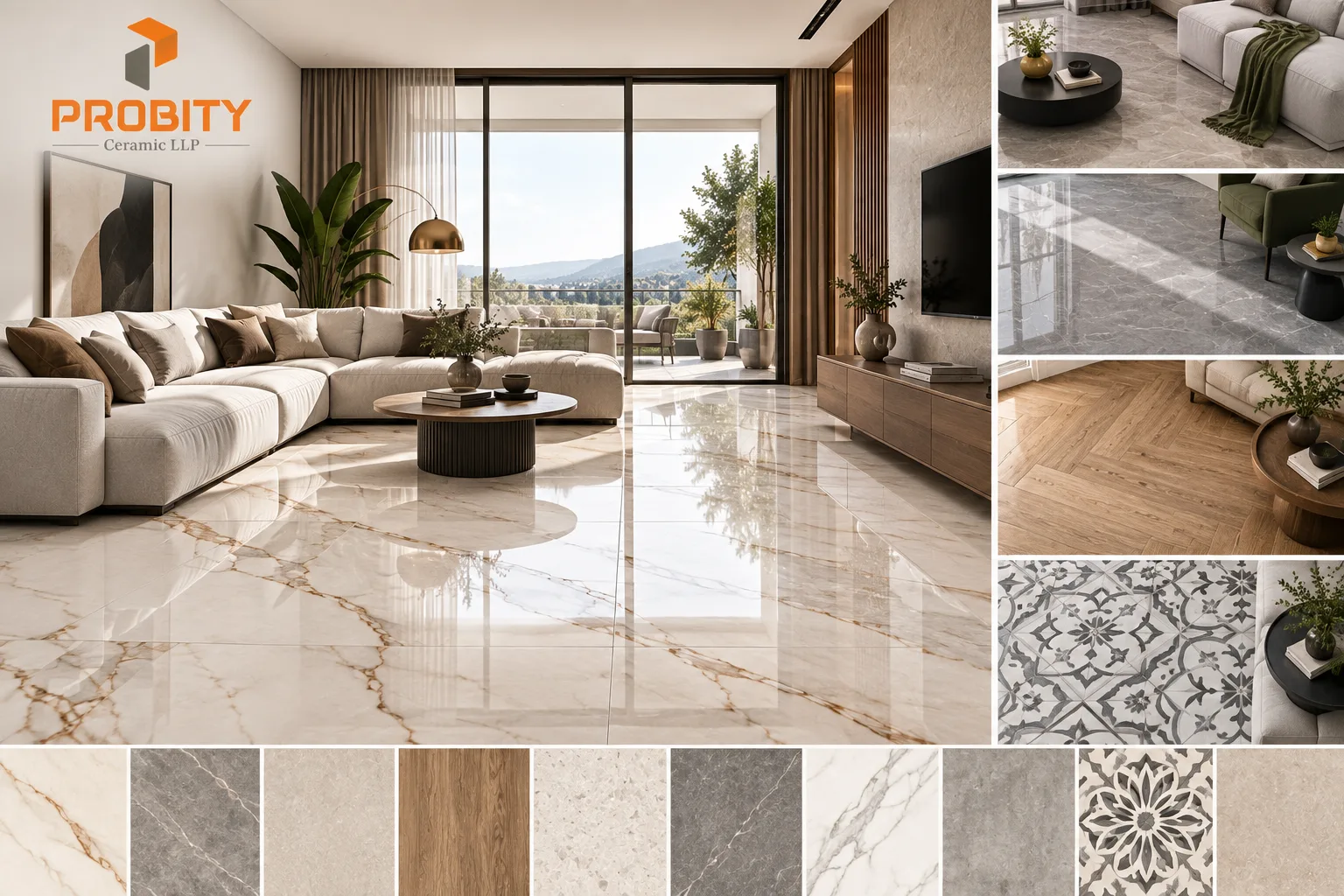
The living room floor sets the tone for the entire home it's the largest continuous surface most guests will see, and it has to work with everything from the sofa fabric to the natural light coming through the windows. Tile has become one of the most popular choices for this space, offering durability, easy maintenance, and a design range that now rivals natural stone and hardwood without the upkeep either material demands.Whether you're after something bold and conversation-starting or quietly elegant and timeless, this list of 15 living room floor tile design ideas covers a wide range of styles, colours, and layouts to help you find the right direction for your space.1. What to Consider Before Choosing Living Room Floor Tiles• Room size and natural light: Lighter tones and larger formats generally make smaller or dimly lit living rooms feel more spacious• PEI rating: Living rooms see regular foot traffic, so a PEI III or higher rating is generally recommended for lasting durability• Existing decor and furniture: The floor should complement, not compete with, your sofa, rugs, and wall colours• Underfloor heating compatibility: If you're planning underfloor heating, confirm the tile and installation method are rated for it• Long-term versatility: A floor is one of the more expensive and disruptive things to change, so consider how a bold choice will age with future furniture and decor updates2. 15 Living Room Floor Tile Design Ideas1. Classic White Marble-Look: A soft-veined, white-and-grey marble-look porcelain tile brings timeless elegance to a living room without the maintenance demands of natural marble. It pairs beautifully with both minimalist and traditional furniture styles and reflects light well in smaller spaces.2. Warm Wood-Look Planks: Wood-look porcelain tile delivers the warmth and texture of hardwood flooring with far greater resistance to moisture, scratching, and fading. Wide plank formats in warm oak or walnut tones create a cosy, inviting living room atmosphere.3. Large-Format Monolithic Grey: A large-format, monolithic-style grey tile with minimal grout lines creates a seamless, contemporary base that lets furniture and art take centre stage. This works especially well in open-plan living spaces.4. Bold Terrazzo Statement Floor: A colour-block or classic marble-chip terrazzo floor turns the living room into the room's main design feature, pairing beautifully with mid-century modern or eclectic maximalist furniture.5. Monochrome Geometric Pattern: A black-and-white or tonal geometric patterned tile adds graphic interest to an otherwise neutral living room, working particularly well in period-style homes or as a nod to Art Deco design.6. Warm Beige Stone-Look: Beige and sand-toned stone-look porcelain tile creates a calm, grounding base for living rooms with warm wood furniture and natural textiles, and works well in both traditional and contemporary interiors.7. Polished PGVT for a Luxe Finish: A high-gloss polished PGVT tile in a neutral tone adds brightness and a sense of formality, particularly effective in living rooms with high ceilings and abundant natural light.8. Concrete-Look Industrial Floor: A matte, concrete-look tile suits industrial-inspired or urban-loft living rooms, pairing well with exposed brick, black metal fixtures, and leather furniture.9. Herringbone Wood-Look Layout: Installing wood-look tile in a herringbone pattern rather than a straight run adds sophisticated visual texture and movement, elevating even a simple, neutral tile choice.10. Deep Charcoal for Drama: A deep charcoal or near-black tile creates a dramatic, moody backdrop that makes lighter furniture, brass accents, and greenery stand out vividly.11. Soft Terracotta Warmth: Warm terracotta-toned tile brings a Mediterranean or Southwestern character to a living room, working particularly well with earthy textiles and rattan or wood furniture.12. Quartz Body Granite-Look Floor: A quartz body tile with a fine granular texture offers a durable, understated stone-like look that suits both contemporary and transitional living rooms without overpowering the space.13. Two-Tone Bordered Layout: Framing a plain central tile field with a contrasting border tile — even a subtle tonal difference — adds architectural definition to an open-plan living area.14. Indoor-Outdoor Continuous Flooring: Using the same large-format tile across an indoor living room and an adjoining patio or balcony creates a seamless visual flow that makes both spaces feel larger and more connected.15. Soft Sage or Muted Green Tone: A muted, sage-toned tile is a distinctive alternative to traditional neutrals, pairing well with warm wood tones and cream furniture for a fresh, contemporary living room palette.3. How to Choose the Right Tile Size for Your Living Room• Small living rooms (under 200 sq ft): Medium to large format tiles (600×600mm or 600×1200mm) with minimal grout lines can help the space feel larger• Medium living rooms (200-400 sq ft): Most standard and large formats work well; consider the room's proportions and furniture layout• Large or open-plan living rooms (400+ sq ft): Large-format or monolithic tiles reduce visual clutter from grout lines and support a more cohesive, expansive look• Rooms with alcoves or awkward layouts: Slightly smaller formats can reduce cutting and wastage around irregular corners4. Tips for Choosing Tile Colour and Finish• Lighter tones reflect more light and generally suit smaller or north-facing rooms with limited natural light• Darker tones create a cosier, more intimate atmosphere but can make a small room feel more enclosed if not balanced with lighter walls and furnishings• Matte and satin finishes tend to hide dust and minor scuffs better than high-gloss finishes in everyday living spaces• Consider how the tile will read under your room's specific lighting always view large samples under both natural daylight and evening artificial light before deciding5. Common Mistakes to Avoid• Choosing a tile based on a small swatch rather than a full-size sample, which can misrepresent colour and pattern at scale• Selecting a highly trend-specific bold pattern for a large, permanent floor area that will be costly to change later• Overlooking PEI rating and durability in favour of appearance alone• Ignoring how the tile will transition to adjoining rooms, especially in open-plan homesConclusionThe right living room floor tile does more than cover a surface, it sets the tone for the entire room and needs to work in harmony with your furniture, lighting, and lifestyle for years to come. Whether you're drawn to the timeless elegance of marble-look porcelain, the warmth of wood-look planks, or the bold personality of terrazzo, there's a tile design to match nearly every living room style and layout.Before committing, always view large-format samples in your actual space under real lighting conditions, and weigh durability alongside aesthetics — the best living room floor is one that still looks and performs beautifully years after installation.
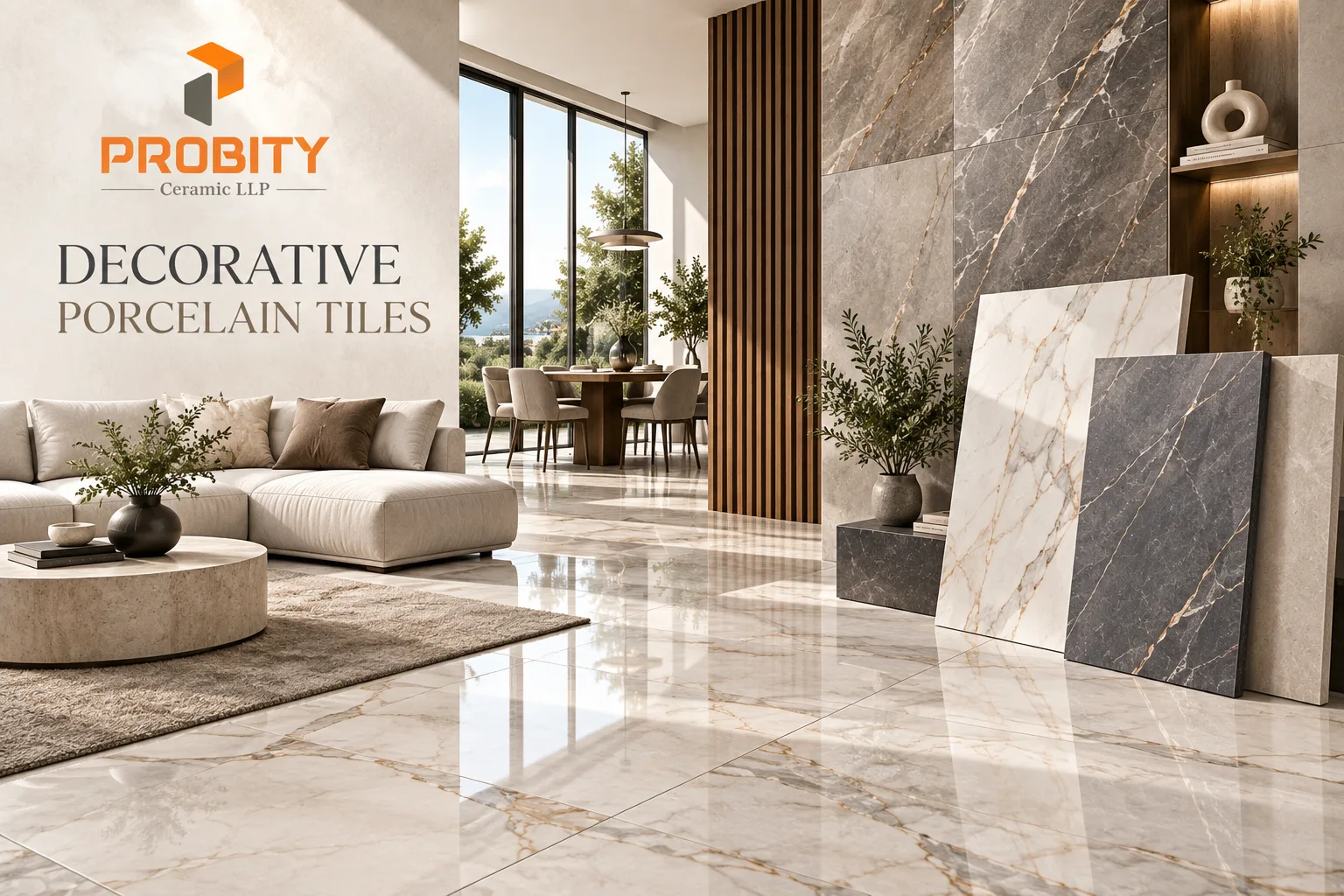
Decorative Porcelain Tiles: Types, Benefits & Design Ideas
Not every tile in a project needs to fade into the background. Decorative porcelain tiles exist specifically to do the opposite - to draw the eye, anchor a design scheme, and turn a functional surface into a genuine architectural feature. Thanks to advances in digital printing, embossing, and surface texturing, today's decorative porcelain tiles can achieve effects that would have required hand-crafted ceramics, natural stone, or specialist artisans only a decade or two ago.This guide covers the main types of decorative porcelain tile available, how they're made, where they work best, and how to combine them thoughtfully with the plainer tile categories that make up the rest of a project.1. What Are Decorative Porcelain Tiles?Decorative porcelain tiles are porcelain tiles designed primarily to create visual interest - through pattern, texture, colour, or dimensional relief rather than to serve as a neutral, large-area background surface. They're built on the same dense, vitrified porcelain body as standard tiles, but the surface treatment is engineered specifically to stand out rather than blend in.This category spans a wide range: bold geometric patterns, 3D textured relief tiles, metallic-effect finishes, encaustic-inspired prints, mosaic-look surfaces, and hand-painted-style designs are all considered decorative porcelain tile, united by their role as a feature element within a broader design scheme.2. Types of Decorative Porcelain TilesPatterned and geometric tiles: Bold repeating patterns, often inspired by Moroccan, Spanish, or Art Deco design traditions, used to create striking floors or feature walls.3D and textured relief tiles: Tiles with raised or sculpted surface texture, adding dimensional depth and shadow play that flat tiles can't achieve.Encaustic-look tiles: Digitally printed porcelain reproducing the look of traditional encaustic cement tiles, without the porosity or maintenance demands of the original material.Mosaic-effect tiles: Porcelain printed or cut to replicate the look of small-format mosaic tilework, offering the visual complexity of mosaic without individual piece installation.Metallic and lustre-finish tiles: Tiles with a reflective, metallic-toned glaze, often used sparingly as an accent in contemporary or glamorous interior schemes.Hand-painted-style tiles: Digitally reproduced artisanal patterns that replicate the look of hand-painted ceramic without piece-to-piece variation in production.3. How Decorative Porcelain Tiles Are ManufacturedDecorative porcelain tiles follow the same core porcelain production process pressing, drying, glazing, and firing with additional techniques applied to create their distinctive surface character:• High-resolution digital inkjet printing reproduces intricate patterns, colour gradients, and fine detail with strong repeat-to-repeat consistency• Embossing and mould-pressing techniques create raised or recessed surface texture for 3D and relief-style tiles• Specialised glaze formulations achieve metallic, lustre, or matte-textured surface effects• Digital pattern randomisation technology avoids obvious repeat patterns across multiple tiles laid together4. Key Benefits of Decorative Porcelain TilesDesign impact without structural change: A feature wall or accent floor can transform a space dramatically without any architectural modification.Durability of standard porcelain: Decorative tiles carry the same strength, water resistance, and longevity as any other vitrified porcelain product.Cost-effective statement-making: Achieving a hand-crafted or artisanal look through digital printing is typically far more affordable than sourcing genuine hand-made tile or natural stone.Consistency at scale: Unlike hand-crafted decorative tile, porcelain versions offer reliable colour and pattern consistency across large orders.Easy maintenance: Despite their decorative appearance, these tiles clean and maintain the same way as standard porcelain.5. Where to Use Decorative Porcelain TilesKitchen backsplashes: One of the most popular applications, where a bold pattern adds character without covering large surface areas.Bathroom feature walls: Behind a vanity or as a shower accent wall, decorative tile creates a focal point within an otherwise neutral space.Entryway and hallway flooring: Patterned or encaustic-look tile is frequently used to make a strong first impression at a home's entrance.Commercial and hospitality interiors: Restaurants, boutique retail, and hotel lobbies often use decorative tile to reinforce brand identity and create memorable spaces.Outdoor accent areas: Patterned tiles rated for exterior use can define pathways, pool surrounds, or patio borders.6. Design Ideas and Current Trends• Pairing a bold patterned floor with plain walls and minimal furniture to let the tile be the design statement• Using 3D textured tiles on a single feature wall to add depth without overwhelming a small space• Framing decorative tile within a defined border of plain porcelain, especially in entryways and hallways• Mixing metallic-accent tiles sparingly within a mosaic-effect layout for added visual sparkle• Using encaustic-look tile in a kitchen or laundry floor for a vintage-inspired, low-maintenance alternative to genuine cement tile7. Decorative vs Plain Porcelain Tiles: When to Use WhichDecorative and plain porcelain tiles play different roles in a design scheme, and understanding that difference helps avoid over- or under-using either type:• Primary role: Decorative tiles serve as a visual focal point through pattern or texture; plain tiles serve as a neutral background surface.• Best coverage area: Decorative tiles work best on accent walls, backsplashes, borders, and smaller floor areas; plain tiles are better suited to large floors, walls, and open areas.• Visual longevity: Bold decorative patterns are more trend-influenced and may feel dated sooner, while plain tiles tend to be more timeless and easier to update the surrounding decor around.• Typical cost: Decorative tiles are often priced higher per square metre due to print and texture complexity, while plain tiles are generally more cost-effective for large-area coverage.A common and effective approach is to use plain porcelain for the majority of a space's surface area, reserving decorative tile for a defined accent zone - this balances visual impact with long-term design flexibility and cost control.8. How to Combine Decorative Tiles with Other Tile Types• Anchor a decorative feature wall or floor area with plain porcelain in a complementary tone elsewhere in the room• Use a single decorative tile family consistently rather than mixing multiple bold patterns in the same sightline• Coordinate grout colour with the tile's base tone to avoid visually fragmenting an intricate pattern• Where budget allows, sample the decorative tile alongside your plain tile choice under actual room lighting before finalising9. Choosing the Right Decorative Tile for Your Space• Consider the scale of the pattern relative to the room - bold, large-scale patterns can overwhelm small spaces• Check PEI rating and slip resistance if the decorative tile will be used on flooring rather than walls• Think about longevity - highly trend-specific patterns are best used in easily updated accent areas rather than permanent, large-scale installations• Request full-size samples, since decorative patterns are difficult to judge accurately from small swatches or digital renders10. Maintenance ConsiderationsDecorative porcelain tiles are maintained the same way as standard porcelain - routine cleaning with a pH-neutral cleaner is generally sufficient. The one consideration worth noting is textured or 3D relief tiles, which can accumulate more dust or grime in recessed areas than a flat surface, and may benefit from a soft brush during cleaning to reach into textured detail.ConclusionDecorative porcelain tiles give designers and homeowners a way to introduce genuine visual character into a space without sacrificing the practicality that makes porcelain such a widely used material. From bold patterned floors to subtle metallic accents, the category has expanded significantly as digital printing and surface texturing technology have matured, making design effects that once required hand-craftsmanship achievable at scale and at a fraction of the cost.Used thoughtfully as a considered accent rather than an overwhelming default - decorative porcelain tile can define a space's character for years while still delivering the durability and easy maintenance that porcelain is known for.