Living Room Floor Tiles Design: 15 Ideas for Your Space
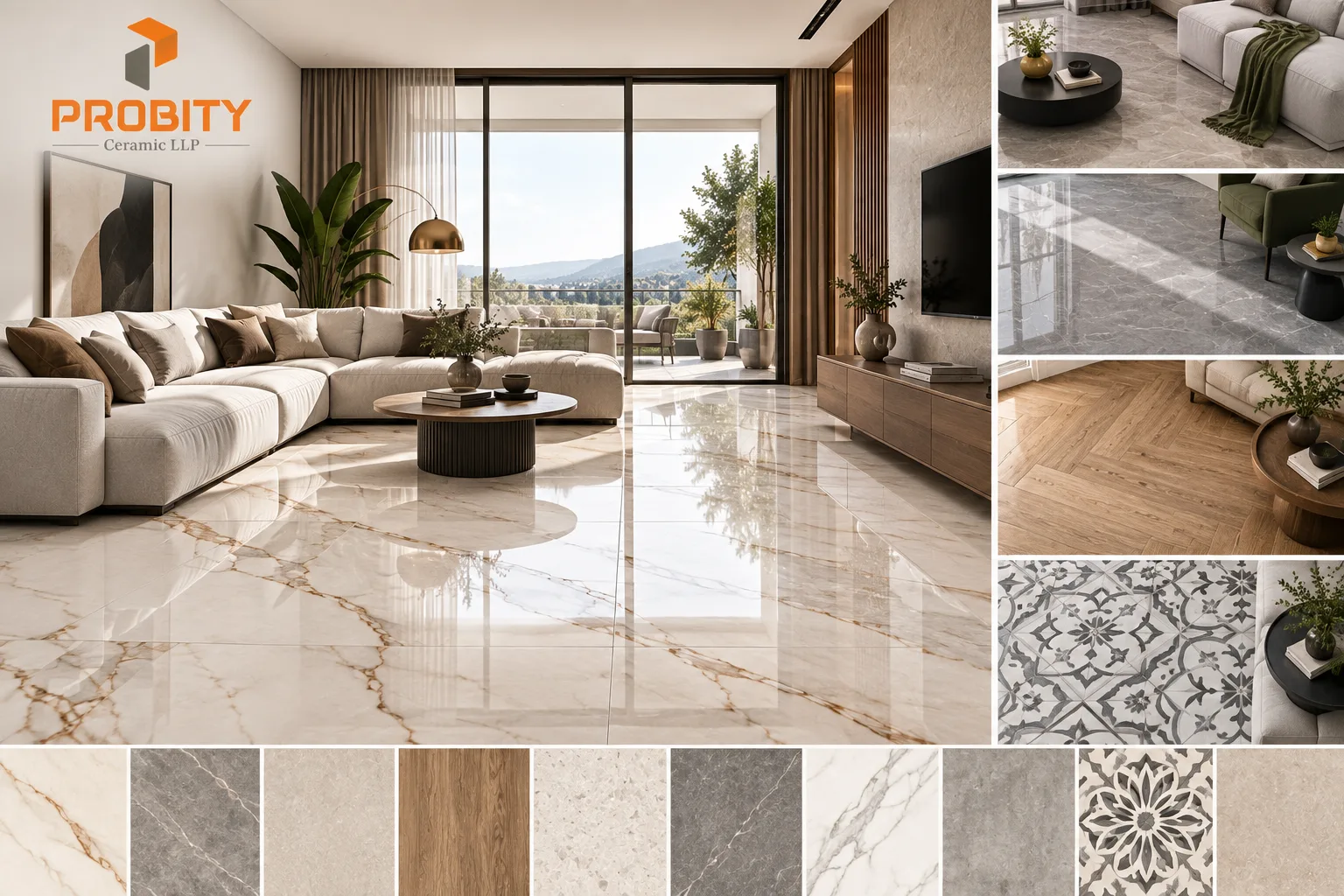
The living room floor sets the tone for the entire home it's the largest continuous surface most guests will see, and it has to work with everything from the sofa fabric to the natural light coming through the windows. Tile has become one of the most popular choices for this space, offering durability, easy maintenance, and a design range that now rivals natural stone and hardwood without the upkeep either material demands.
Whether you're after something bold and conversation-starting or quietly elegant and timeless, this list of 15 living room floor tile design ideas covers a wide range of styles, colours, and layouts to help you find the right direction for your space.
1. What to Consider Before Choosing Living Room Floor Tiles
• Room size and natural light: Lighter tones and larger formats generally make smaller or dimly lit living rooms feel more spacious
• PEI rating: Living rooms see regular foot traffic, so a PEI III or higher rating is generally recommended for lasting durability
• Existing decor and furniture: The floor should complement, not compete with, your sofa, rugs, and wall colours
• Underfloor heating compatibility: If you're planning underfloor heating, confirm the tile and installation method are rated for it
• Long-term versatility: A floor is one of the more expensive and disruptive things to change, so consider how a bold choice will age with future furniture and decor updates
2. 15 Living Room Floor Tile Design Ideas
1. Classic White Marble-Look: A soft-veined, white-and-grey marble-look porcelain tile brings timeless elegance to a living room without the maintenance demands of natural marble. It pairs beautifully with both minimalist and traditional furniture styles and reflects light well in smaller spaces.
2. Warm Wood-Look Planks: Wood-look porcelain tile delivers the warmth and texture of hardwood flooring with far greater resistance to moisture, scratching, and fading. Wide plank formats in warm oak or walnut tones create a cosy, inviting living room atmosphere.
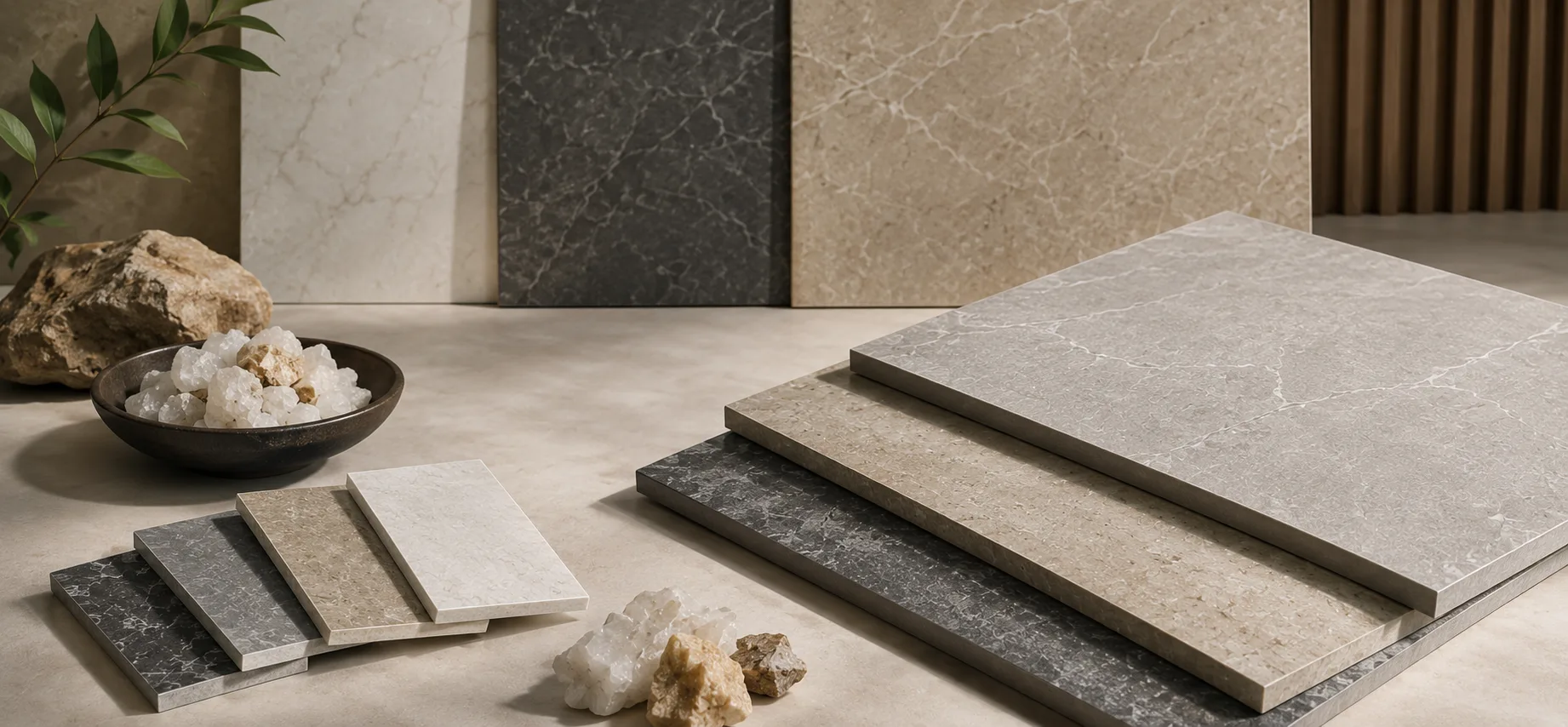
3. Large-Format Monolithic Grey: A large-format, monolithic-style grey tile with minimal grout lines creates a seamless, contemporary base that lets furniture and art take centre stage. This works especially well in open-plan living spaces.
4. Bold Terrazzo Statement Floor: A colour-block or classic marble-chip terrazzo floor turns the living room into the room's main design feature, pairing beautifully with mid-century modern or eclectic maximalist furniture.
5. Monochrome Geometric Pattern: A black-and-white or tonal geometric patterned tile adds graphic interest to an otherwise neutral living room, working particularly well in period-style homes or as a nod to Art Deco design.
6. Warm Beige Stone-Look: Beige and sand-toned stone-look porcelain tile creates a calm, grounding base for living rooms with warm wood furniture and natural textiles, and works well in both traditional and contemporary interiors.
7. Polished PGVT for a Luxe Finish: A high-gloss polished PGVT tile in a neutral tone adds brightness and a sense of formality, particularly effective in living rooms with high ceilings and abundant natural light.
8. Concrete-Look Industrial Floor: A matte, concrete-look tile suits industrial-inspired or urban-loft living rooms, pairing well with exposed brick, black metal fixtures, and leather furniture.
9. Herringbone Wood-Look Layout: Installing wood-look tile in a herringbone pattern rather than a straight run adds sophisticated visual texture and movement, elevating even a simple, neutral tile choice.
10. Deep Charcoal for Drama: A deep charcoal or near-black tile creates a dramatic, moody backdrop that makes lighter furniture, brass accents, and greenery stand out vividly.
11. Soft Terracotta Warmth: Warm terracotta-toned tile brings a Mediterranean or Southwestern character to a living room, working particularly well with earthy textiles and rattan or wood furniture.
12. Quartz Body Granite-Look Floor: A quartz body tile with a fine granular texture offers a durable, understated stone-like look that suits both contemporary and transitional living rooms without overpowering the space.
13. Two-Tone Bordered Layout: Framing a plain central tile field with a contrasting border tile — even a subtle tonal difference — adds architectural definition to an open-plan living area.
14. Indoor-Outdoor Continuous Flooring: Using the same large-format tile across an indoor living room and an adjoining patio or balcony creates a seamless visual flow that makes both spaces feel larger and more connected.
15. Soft Sage or Muted Green Tone: A muted, sage-toned tile is a distinctive alternative to traditional neutrals, pairing well with warm wood tones and cream furniture for a fresh, contemporary living room palette.
3. How to Choose the Right Tile Size for Your Living Room
• Small living rooms (under 200 sq ft): Medium to large format tiles (600×600mm or 600×1200mm) with minimal grout lines can help the space feel larger
• Medium living rooms (200-400 sq ft): Most standard and large formats work well; consider the room's proportions and furniture layout
• Large or open-plan living rooms (400+ sq ft): Large-format or monolithic tiles reduce visual clutter from grout lines and support a more cohesive, expansive look
• Rooms with alcoves or awkward layouts: Slightly smaller formats can reduce cutting and wastage around irregular corners
4. Tips for Choosing Tile Colour and Finish
• Lighter tones reflect more light and generally suit smaller or north-facing rooms with limited natural light
• Darker tones create a cosier, more intimate atmosphere but can make a small room feel more enclosed if not balanced with lighter walls and furnishings
• Matte and satin finishes tend to hide dust and minor scuffs better than high-gloss finishes in everyday living spaces
• Consider how the tile will read under your room's specific lighting always view large samples under both natural daylight and evening artificial light before deciding
5. Common Mistakes to Avoid
• Choosing a tile based on a small swatch rather than a full-size sample, which can misrepresent colour and pattern at scale
• Selecting a highly trend-specific bold pattern for a large, permanent floor area that will be costly to change later
• Overlooking PEI rating and durability in favour of appearance alone
• Ignoring how the tile will transition to adjoining rooms, especially in open-plan homes
Conclusion
The right living room floor tile does more than cover a surface, it sets the tone for the entire room and needs to work in harmony with your furniture, lighting, and lifestyle for years to come. Whether you're drawn to the timeless elegance of marble-look porcelain, the warmth of wood-look planks, or the bold personality of terrazzo, there's a tile design to match nearly every living room style and layout.
Before committing, always view large-format samples in your actual space under real lighting conditions, and weigh durability alongside aesthetics — the best living room floor is one that still looks and performs beautifully years after installation.
Related Articles
Decorative Porcelain Tiles: Types, Benefits & Design Ideas
GVT vs PGVT Tiles: Key Differences Explained | Probity Ceramic