GVT vs PGVT Tiles: Key Differences Explained | Probity Ceramic
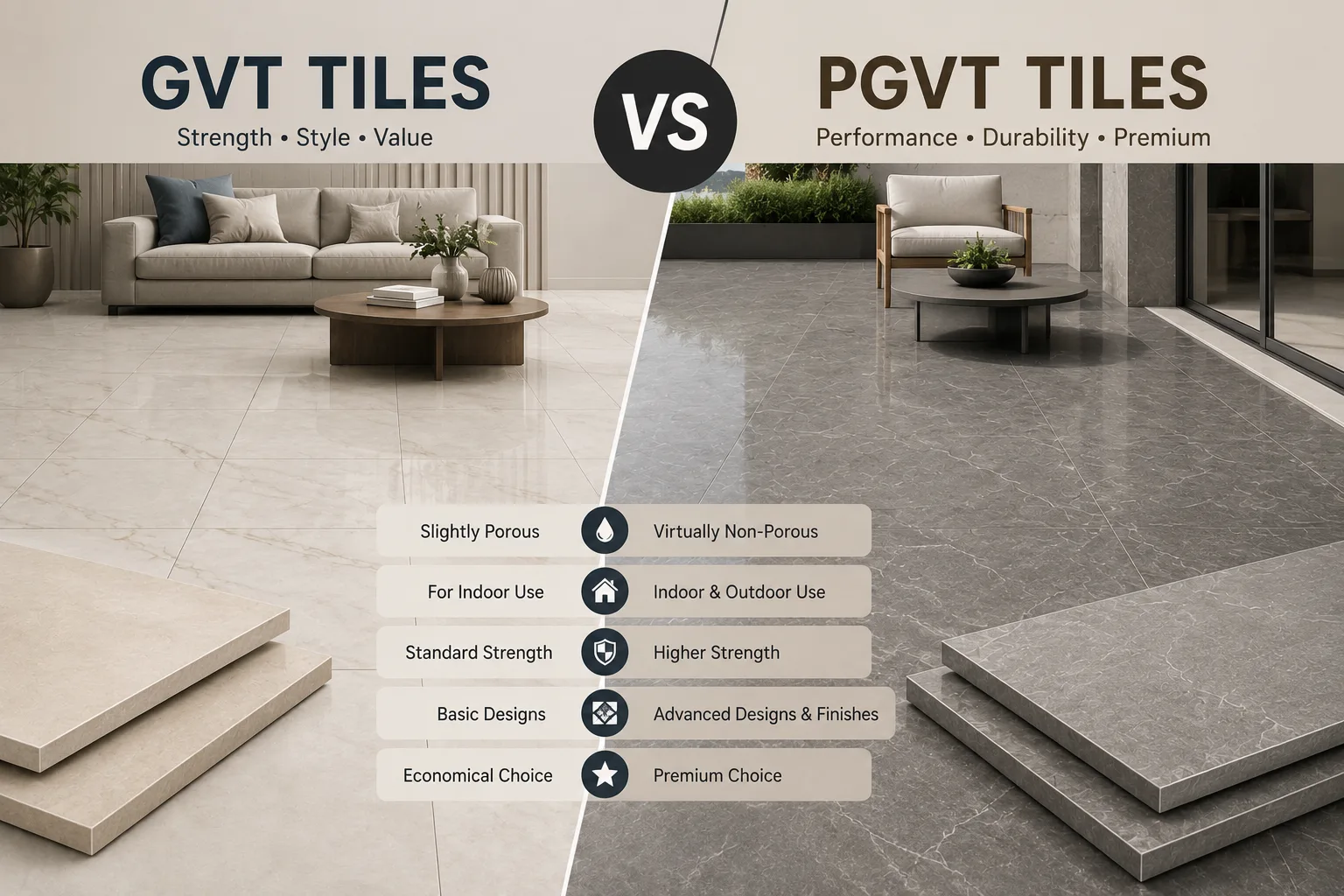
Among the many vitrified tile categories on the market, GVT and PGVT are two of the most frequently confused - often used almost interchangeably by buyers, and sometimes inconsistently even in supplier catalogues. Both are glazed vitrified tiles built on the same underlying dense, low-porosity porcelain body, but the finish applied to that body creates real practical differences in appearance, slip resistance, durability, and ideal application.
Choosing the wrong one isn't usually a disaster, but it can mean a glossy floor that's more slip-prone than a project needs, or a matte finish where a client actually wanted the reflective depth of a polished surface. This guide breaks down exactly what separates GVT from PGVT, so you can specify or source with confidence.
1. What Is GVT (Glazed Vitrified Tile)?
GVT stands for Glazed Vitrified Tile - a porcelain tile with a dense, vitrified body finished with a glazed layer that carries the printed design, colour, and texture. The glaze is applied and fired onto the surface, giving GVT tiles a matte, satin, or lightly textured finish depending on the specific product line.
GVT tiles are valued for combining design flexibility (through digital printing on the glaze layer) with the strength and low water absorption of a vitrified porcelain body, making them one of the most widely used tile categories for both floors and walls.
2. What Is PGVT (Polished Glazed Vitrified Tile)?
PGVT stands for Polished Glazed Vitrified Tile - essentially a GVT tile that undergoes an additional mechanical polishing process after glazing and firing. This polishing step buffs the surface to a high-gloss, reflective finish, giving PGVT tiles their characteristic glass-like shine and depth.
The polishing process is what distinguishes PGVT from standard GVT - the underlying body and glazing technology are largely the same, but the finishing step changes both the tile's appearance and some of its performance characteristics.
3. How the Manufacturing Process Differs
Both GVT and PGVT begin with the same core process: pressing a vitrified porcelain body, applying a digitally printed glaze layer, and firing at high temperature. The difference emerges after firing:
• GVT: The tile is fired, cooled, and finished as-is, retaining a matte or satin surface directly from the glazing and firing process
• PGVT: The fired tile undergoes an additional mechanical polishing stage, using abrasive polishing heads to buff the glazed surface to a high-gloss finish
This additional polishing step adds processing time and cost, which is reflected in PGVT's typically higher price point compared to equivalent GVT products.
4. Visual and Aesthetic Differences
The most immediately noticeable difference between GVT and PGVT is light reflectivity. PGVT's polished surface creates a mirror-like gloss that makes spaces feel brighter and more expansive, which is why it's popular for statement floors in lobbies, retail spaces, and formal interiors. GVT's matte or satin finish offers a more understated, natural look that suits a broader range of design styles, including contemporary and minimalist interiors where a non-reflective surface is preferred.
5. Durability and Performance Comparison
Because both GVT and PGVT share the same underlying vitrified porcelain body, their core structural durability - breaking strength, water absorption, and general wear resistance - is broadly comparable. The meaningful performance difference lies in surface-level characteristics:
• Slip resistance: GVT's matte or satin surface typically offers better slip resistance than PGVT's polished finish, which becomes noticeably more slippery when wet
• Scratch visibility: Polished PGVT surfaces can show fine scratches more visibly over time than a matte GVT surface, particularly in high-abrasion areas
• Surface wear over time: A polished surface exposed to continuous foot traffic and grit can gradually lose some of its initial gloss level unless properly maintained
6. Where to Use GVT vs PGVT
GVT is generally the better choice for: bathrooms, kitchens, entryways, exterior areas, and any high-traffic commercial floor where slip resistance and practical durability are priorities.
PGVT is generally the better choice for: living rooms, hotel lobbies, retail showroom floors, feature walls, and formal interior spaces where visual impact and reflective depth are the design priority, and moisture exposure is minimal.
Many projects use both strategically - PGVT in dry, design-forward zones and GVT in wet or high-traffic areas - to balance aesthetics with practical performance across a single space.
7. Cost Considerations
PGVT tiles typically cost more than equivalent GVT products from the same manufacturer, reflecting the added time, machinery, and yield loss associated with the polishing process. For large-volume commercial or export orders, this cost difference can be material to overall project budgeting, and it's worth requesting like-for-like pricing on both finishes when evaluating a product line.
8. Maintenance Differences
• GVT: Generally easier to maintain day-to-day, as the matte or satin surface shows less visible dust, smudging, and minor surface marks
• PGVT: Requires more regular cleaning to maintain gloss appearance, as fingerprints, dust, and water spots are more visible on a reflective surface, and appropriate non-abrasive cleaning products should be used to avoid dulling the polish over time
9. How to Choose Between GVT and PGVT for Your Project
• Identify the primary use of the space - wet area or high-traffic zone points toward GVT; a design-forward dry space points toward PGVT
• Confirm the slip resistance (R-rating or equivalent) required for the application, particularly for commercial or public spaces with safety compliance requirements
• Weigh budget against visual impact - PGVT delivers a premium look at a higher cost, while GVT offers strong design flexibility at a more accessible price point
• Request physical samples of both finishes under the actual lighting conditions of the space before finalising a decision
10. Common Buyer Mistakes to Avoid
• Specifying PGVT for wet or outdoor areas without accounting for its reduced slip resistance
• Assuming GVT and PGVT are simply different product lines rather than understanding they can be the same base tile with different finishing
• Not requesting slip resistance ratings when compliance requirements apply, particularly in commercial and public buildings
• Comparing GVT and PGVT prices across different manufacturers without confirming both are equivalent quality and body specification
Conclusion
GVT and PGVT share the same fundamental porcelain body but diverge at the finishing stage - one left matte or satin, the other mechanically polished to a high gloss. That single difference in processing drives meaningful practical trade-offs in slip resistance, visual impact, maintenance, and cost.
The right choice comes down to matching the finish to the specific demands of the space: GVT where practicality and safety matter most, PGVT where visual statement is the priority. Understanding this distinction clearly - rather than treating the two as interchangeable - is the difference between a tile that performs well for years and one that creates avoidable problems after installation.
Related Articles

Bookmatched Marble Look Porcelain: The New Statement Surface
600×1200 vs 800×1600 vs 1200×2400 Tiles: Which Size Is Right?