Best Anti-Slip Outdoor Tiles for Patios, Balconies & Pool Areas
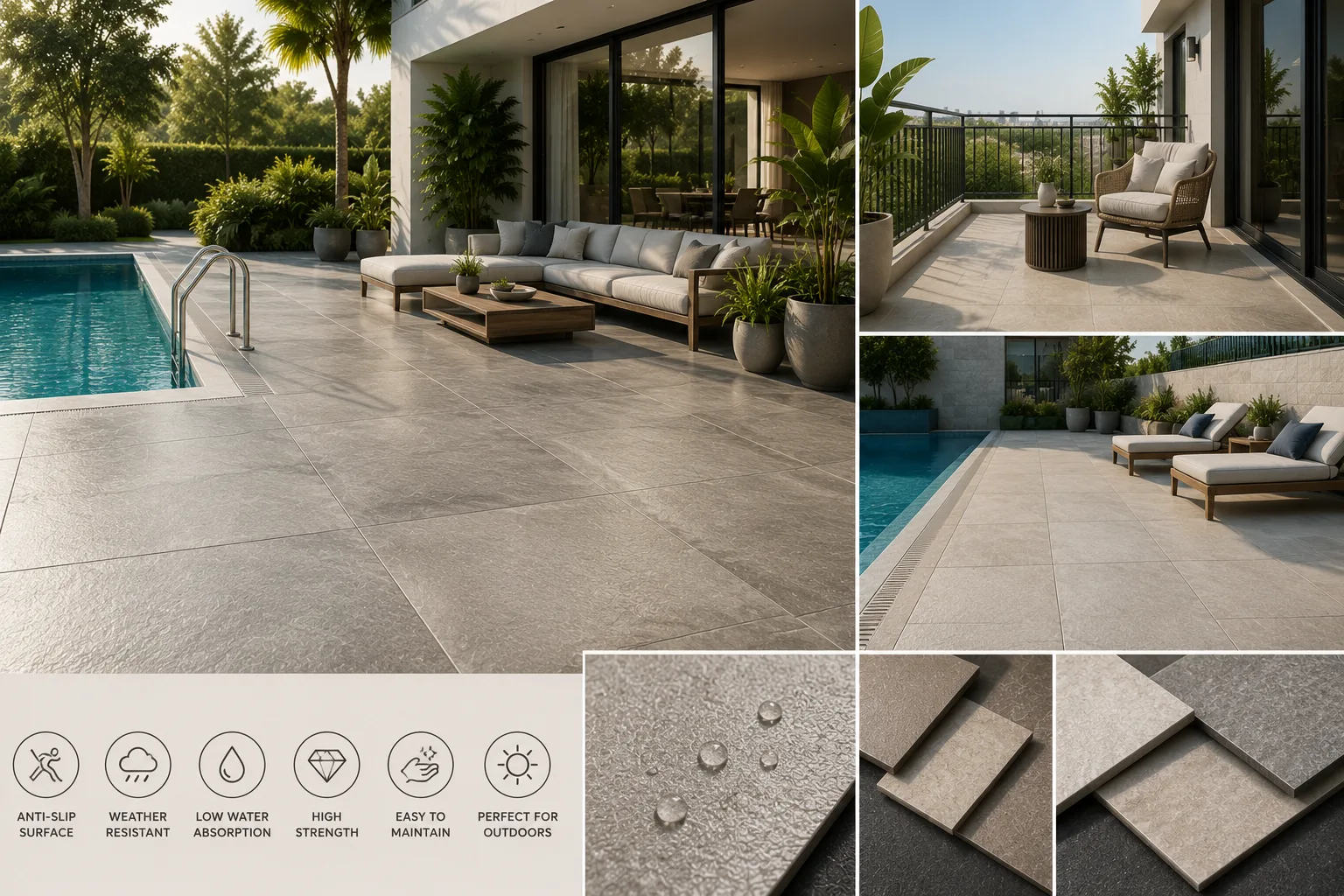
Outdoor tile has to do a job that indoor tile never faces: stay safely walkable when it's wet, whether from rain, pool splash-out, or morning dew, while standing up to sun, temperature swings, and in many climates, frost. Choosing the wrong tile for a patio, balcony, or pool deck isn't just a design mistake - it's a genuine safety risk, and one of the more common ways homeowners and contractors discover this is after someone slips on a beautiful but poorly suited surface.
This guide is written for homeowners planning an outdoor renovation, contractors specifying tile for a project, and distributors building out an outdoor product range. It explains what actually makes a tile anti-slip, how to read the ratings that matter, and which tile types and finishes work best for patios, balconies, and pool areas specifically - since the right choice genuinely differs by application.
By the end, you'll know how to choose an outdoor tile that looks good and is actually safe to walk on, wet or dry.
1. Why Slip Resistance Matters for Outdoor Tiling
Outdoor tiled surfaces are wet far more often than most indoor floors - rain, sprinkler overspray, pool splash-out, condensation, and in many climates, frost or dew, all create conditions where a tile's dry-floor appearance tells you almost nothing about how safe it will be underfoot when it matters. Slip resistance is not a cosmetic spec; it's a functional safety requirement, and it should be one of the first filters applied when selecting outdoor tile, not an afterthought once a design has already been chosen.
2. Understanding Slip Resistance Ratings
A handful of standardised systems exist for measuring and communicating slip resistance, and it's worth understanding what each actually tells you:
R-Rating (DIN 51130, European ramp test): measures slip resistance under oily/wet conditions using a ramp test, rated from R9 (lowest) to R13 (highest). For outdoor and pool surrounds, R10 or higher is generally recommended, with R11+ for pool edges and heavily wet areas.
DCOF (Dynamic Coefficient of Friction, US standard, ANSI A137.1): measures friction under wet conditions; a DCOF of 0.42 or higher is the commonly referenced threshold for level, wet-exposed surfaces in the US market.
Pendulum Test Value (PTV, UK/Australia): measures slip resistance using a swinging pendulum test, with higher PTV values indicating better wet slip resistance, commonly referenced for public and pool-surround specifications.
Barefoot Ramp Test (DIN 51097, class A/B/C): specifically designed for barefoot wet areas like pool surrounds and changing areas, with class C offering the highest slip resistance for barefoot use.
Because these systems are not directly interchangeable, always check which rating system your supplier is quoting and cross-reference it against your local building code or project specification requirement, rather than assuming a single generic "anti-slip" label is sufficient.
3. What Makes a Tile Genuinely Anti-Slip
Slip resistance comes from a combination of surface texture, microscopic surface roughness, and material composition, rather than any single factor alone. A textured or structured surface - created through embossing, sandblasting-effect glazing, or a deliberately matte, non-polished finish - increases the surface area of contact and disrupts the thin water film that causes slipping. Some anti-slip porcelain tiles incorporate fine granules or a textured aggregate finish specifically engineered to maximise grip even under heavy water flow, common on pool coping and surround products.
It's worth being cautious of tiles marketed loosely as "anti-slip" without a specific, testable rating attached - a genuine anti-slip product should have a documented R-rating, DCOF value, or equivalent, not just a marketing claim.
4. Best Tile Types for Patios
Patios generally see moderate, intermittent wetness (rain, occasional hosing down) rather than constant water exposure, making R10–R11 rated textured porcelain a solid, broadly applicable choice. Popular options include:
• Textured stone-look porcelain, replicating natural sandstone or slate with genuine slip resistance built in
• Wood-look porcelain with an embossed grain texture, popular for a warm, natural aesthetic with practical grip
• Concrete-look porcelain with a lightly structured matte finish, suited to contemporary outdoor design
For covered or partially covered patios with less direct rain exposure, a slightly lower R-rating (R10) is often sufficient, while fully exposed patios in high-rainfall climates benefit from R11.
5. Best Tile Types for Balconies
Balconies face similar wetness exposure to patios but often have additional considerations: smaller surface area meaning water can pool more readily without adequate drainage falls, and in many buildings, weight restrictions that favour lighter-weight porcelain over heavier natural stone options. R10–R11 rated porcelain in a moderate-texture finish is generally the right balance for balconies - textured enough for genuine grip, but not so aggressively textured that it becomes uncomfortable underfoot or difficult to clean in a smaller, more frequently used space.
6. Best Tile Types for Pool Decks and Wet Areas
Pool surrounds face the most demanding wet-slip conditions of any outdoor application - constant water exposure, frequent barefoot use, and often sunscreen or other residues that can reduce grip further. For pool decks and surrounds:
• R11 or higher (or DIN 51097 Class B/C for barefoot areas) is the appropriate standard, reflecting the constant wetness and barefoot use typical of pool environments.
• Cooler-toned or lighter colours are worth considering for pool coping and surrounds specifically, since dark tile can become uncomfortably hot underfoot in direct sun - a practical, not just aesthetic, consideration.
• Specifically engineered pool-edge and coping profiles, often featuring a bullnose edge and enhanced texture, are purpose-built for the pool perimeter rather than adapted from general outdoor product.
7. Porcelain vs Natural Stone vs Other Outdoor Materials
Porcelain: offers consistent, engineered slip resistance with a documented rating, low water absorption, minimal maintenance, and strong resistance to staining and fading - generally the most practical modern choice for patios, balconies, and pool decks.
Natural stone (travertine, sandstone, slate): offers a genuinely natural texture and grip in many cases, but requires regular sealing to maintain both its appearance and its water resistance, and slip performance can vary naturally across a single batch in a way engineered porcelain does not.
Concrete pavers: cost-effective and can be finished with a textured or exposed-aggregate surface for grip, but generally offer less design range and can be more porous and prone to staining than porcelain.
For most residential and commercial outdoor projects today, textured porcelain offers the most reliable, low-maintenance combination of documented slip resistance and design range.
8. Frost Resistance and Weather Durability
Beyond slip resistance, outdoor tile in any climate with freeze-thaw cycles needs genuine frost resistance - a low water absorption rating (typically below 0.5% for fully vitrified porcelain) that prevents absorbed water from expanding and cracking the tile when it freezes. UV stability is equally important for colour retention in direct sun exposure; porcelain's fired-in colour and glaze generally resist fading far better than painted or coated outdoor surfaces over years of sun exposure.
9. Finish and Texture: Balancing Grip and Comfort
More texture generally means more grip, but also means a rougher surface underfoot and, in some cases, more effort to clean thoroughly. The right balance depends on the application: pool surrounds and barefoot areas benefit from a finer, engineered texture that maximises grip without being abrasive on bare skin, while patios and driveways can accommodate a coarser, more heavily textured finish since footwear is more commonly worn in those areas. Testing a physical sample underfoot, both dry and wet, is the most reliable way to judge whether a specific texture level is right for your application before committing to a full order.
10. Installation Considerations for Outdoor Anti-Slip Tiles
• Adequate drainage fall: outdoor surfaces should be installed with a slight slope (typically 1–2%) to direct water away rather than allowing it to pool, which undermines even a well-rated anti-slip tile.
• Exterior-grade adhesive and grout: outdoor installations require frost-resistant, flexible adhesive and grout systems rated for exterior and, where relevant, pool-chemical exposure.
• Expansion joints: outdoor tiled areas need properly placed expansion joints to accommodate thermal movement across temperature swings, preventing cracking over time.
• Edge and step nosing: steps and pool edges benefit from purpose-made anti-slip nosing profiles rather than a standard flat tile edge, for an added safety margin at the highest-risk points.
11. Common Mistakes When Choosing Outdoor Tiles
Using indoor-rated tile outdoors. Indoor porcelain and ceramic often lack the frost resistance and slip rating required for safe, durable outdoor use, even if it looks visually similar.
Trusting a marketing claim without a documented rating. Always request the specific R-rating, DCOF, or equivalent test value rather than accepting a generic "non-slip" label.
Choosing the same tile for the whole outdoor area regardless of wetness level. A pool surround needs a higher slip rating than a covered, rarely-wet patio corner - matching the rating to the specific zone's actual exposure is more effective than a single blanket choice.
Ignoring heat retention in dark tile colours. Particularly relevant for pool surrounds and barefoot areas in hot, sunny climates.
Skipping proper drainage falls during installation. Even a well-rated anti-slip tile performs poorly if water is allowed to pool on a flat or poorly sloped surface.
12. Working with Probity Ceramic LLP: What Sets Us Apart
Probity Ceramic LLP manufactures outdoor porcelain tiles engineered specifically for slip resistance, frost durability, and long-term outdoor performance, for distributors, contractors, and construction companies sourcing patio, balcony, and pool deck product.
Our outdoor and anti-slip range covers:
• Textured outdoor porcelain rated R10–R11+ across stone-look, wood-look, and concrete-look design collections
• Dedicated pool coping and surround profiles with enhanced barefoot-safe texture
• Frost-resistant formulations with low water absorption, tested and documented for cold-climate export markets
• A range of tones including lighter, heat-reflective colourways suited to pool surrounds in hot climates
• Technical data sheets with documented slip resistance and water absorption values for every outdoor product line
What our buyers consistently ask us for:
Documented, product-specific slip resistance ratings rather than a general marketing claim, frost-resistance test data for cold-climate markets, and physical samples to test grip and appearance underfoot before committing to a full project order.
We work with:
Contractors and landscapers specifying outdoor and pool deck tile for residential projects, distributors building an outdoor product range, and construction companies sourcing consistent, code-compliant anti-slip product for multi-unit residential or hospitality developments.
Conclusion
Choosing the best anti-slip outdoor tile for a patio, balcony, or pool area comes down to matching the tile's documented slip resistance rating and frost durability to the specific wetness and use conditions of that space - not choosing on appearance alone. Pool surrounds and barefoot areas need the highest slip ratings, patios and balconies can work well with a moderate textured finish, and every outdoor application benefits from genuine frost resistance in any climate with freeze-thaw cycles.
Getting this right at the specification stage is what makes an outdoor tiled space genuinely safe to use in every season and every weather condition, not just attractive in the photos.
Related Articles
Decorative porcelain tiles
How Lighting Changes the Appearance of Tiles