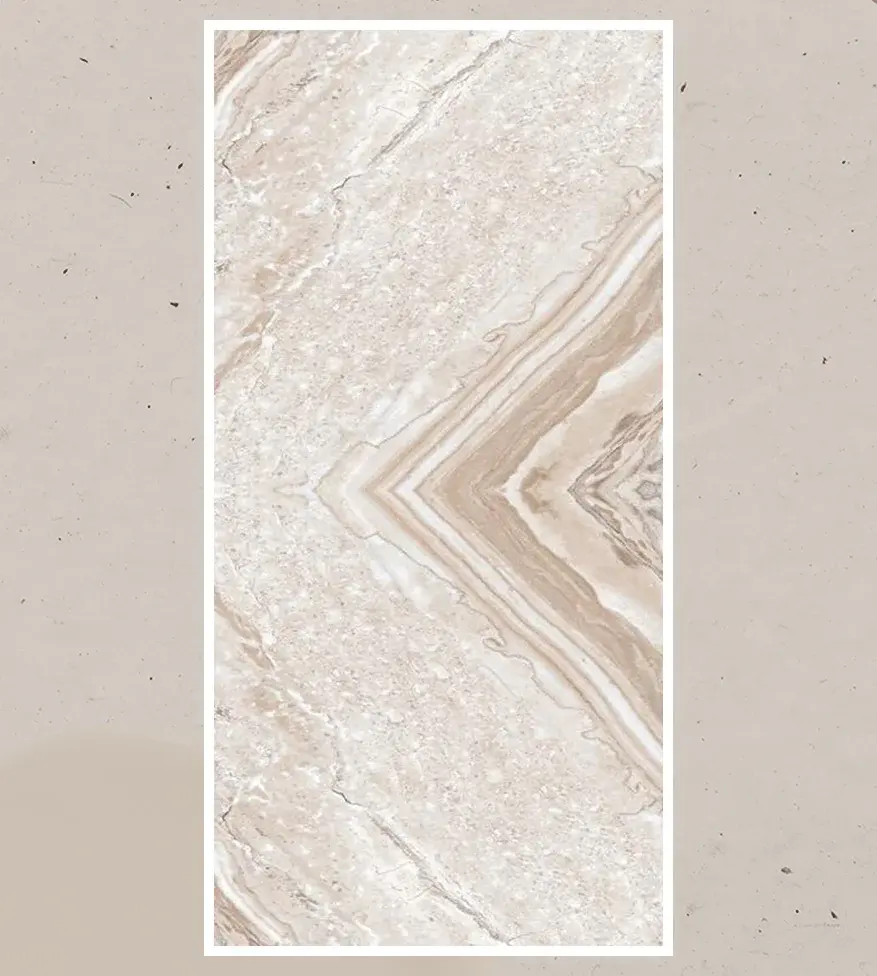
How to Import Tiles from India: A Complete Guide for Importers
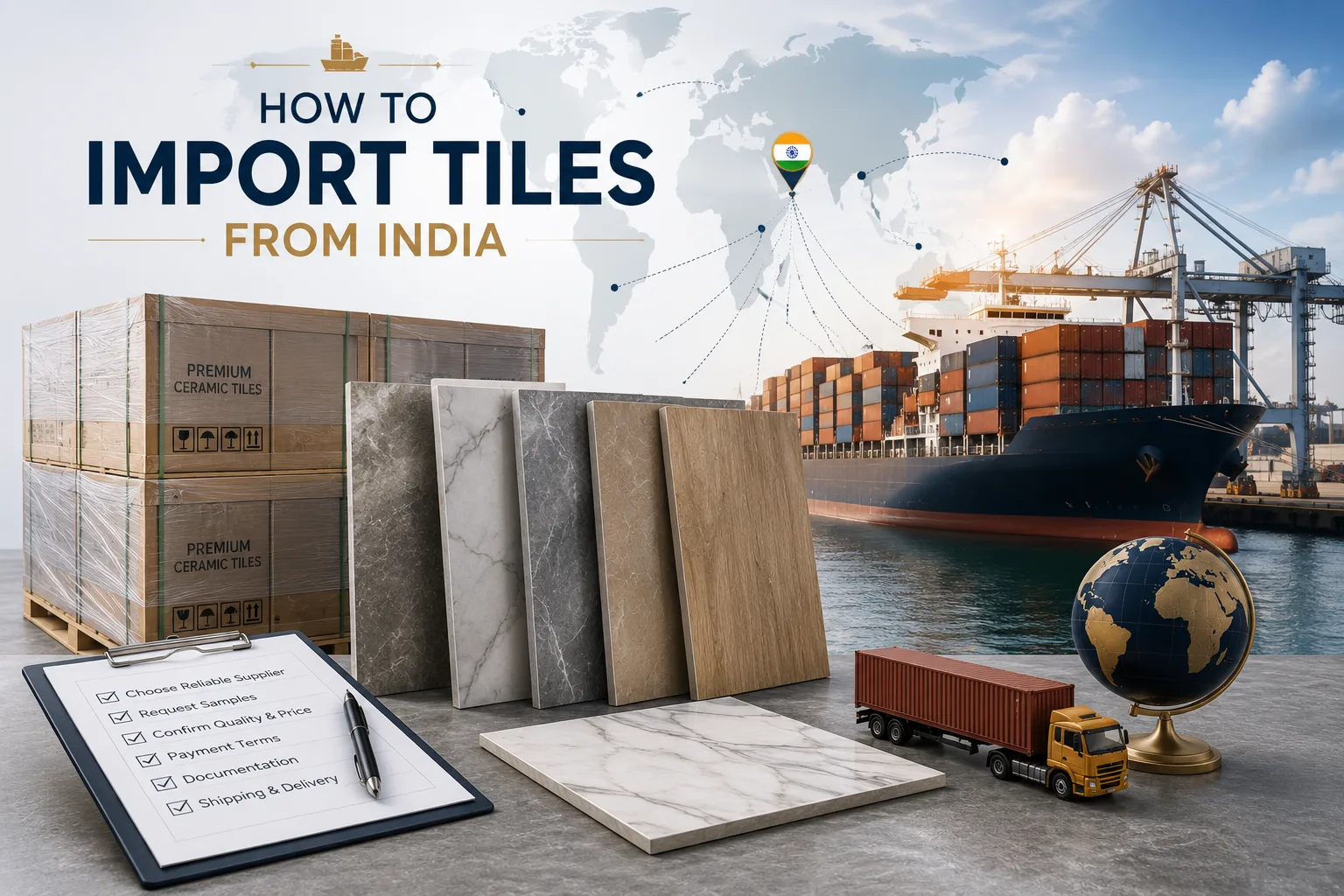
India ships porcelain and ceramic tiles to more than 150 countries every year, and for good reason: competitive manufacturing cost, rapidly improving product quality, and an export ecosystem built specifically around container-scale shipments. But "importing tiles from India" is not a single transaction — it is a process with a dozen decision points, any one of which can turn a good deal into a costly delay.
This guide is written for first-time importers placing their initial container order, regional distributors formalising a repeat supply chain, and construction or project companies sourcing tiles at scale for developments. It walks through the entire import journey in order: finding and vetting a supplier, understanding product specification, agreeing commercial terms, managing shipping and documentation, calculating true landed cost, and avoiding the mistakes that most commonly derail first-time imports.
By the end, you will have a working process you can apply to your own import — from enquiry to container delivery.
1. Why Import Tiles from India
India is the world's second-largest producer and exporter of ceramic and porcelain tiles after China, with Morbi in Gujarat accounting for the overwhelming majority of that output. For importers, distributors, and construction companies, the appeal comes down to five factors:
Cost efficiency without a quality trade-off. Lower labour and energy costs, combined with proximity to raw material deposits, let Indian manufacturers price competitively while running modern production lines.
Scale. A single Morbi manufacturer can often supply full-container volumes on a recurring monthly basis — a meaningful advantage for construction companies with large, phased projects.
Product breadth. From 300×600mm wall tiles to 1200×2400mm porcelain slabs, one supply relationship can cover an entire project specification.
Mature export infrastructure. Ports at Mundra, Kandla, and Nhava Sheva handle high tile-export volumes with established FCL shipping lanes to the Middle East, Europe, Africa, Southeast Asia, and the Americas.
OEM and private label flexibility. Distributors building their own branded ranges can commission custom collections at a scale that is difficult to replicate elsewhere.
2. Manufacturers vs. Traders vs. Export Houses: Who You're Actually Buying From
Before you request a single quotation, understand who you are actually dealing with — it changes everything downstream.
Direct manufacturers own their kilns, pressing lines, and glazing equipment. You get factory audit access, direct MOQ negotiation, and accountability if a batch fails quality checks.
Trading companies and agents represent multiple factories and offer wide catalogue variety, but add a margin layer and cannot guarantee production quality or facilitate a factory audit.
Export houses sometimes run partial production and supplement with third-party manufacturing, which introduces batch-to-batch shade and calibration inconsistency — a real risk for large or phased construction projects that need to match tiles ordered months apart.
For bulk and repeat imports, a direct manufacturer relationship is almost always the safer commercial choice. Request the GST registration number, IEC (Import Export Code), and factory address, and verify all three independently before proceeding.
3. Step-by-Step Process to Import Tiles from India
This is the sequence a professional import follows, from first enquiry to goods received at destination.
1.Define your specification — size, finish, surface, quantity, and target price band.
2.Shortlist manufacturers — direct factories only, verified against GST/IEC records.
3.Request quotations (proforma invoices) — compare on a like-for-like Incoterm basis.
4.Request production samples — never rely on display samples or catalogue photography.
5.Negotiate MOQ, pricing, and payment terms — typically 30% advance, balance against shipping documents.
6.Confirm the order in writing — every specification detail stated explicitly on the proforma invoice.
7.Arrange or confirm freight — FCL booking, Incoterm, and estimated transit time.
8.Track production and pre-shipment inspection — third-party inspection is standard practice for first orders.
9.Review shipping documents — Bill of Lading, Commercial Invoice, Packing List, Certificate of Origin.
10.Clear customs at destination — using a licensed customs broker familiar with tile HS codes and duty structure.
11.Receive and inspect the container — check for transit damage and cross-verify quantity, shade, and batch against the purchase order.
4. Defining Your Product Specification Before You Enquire
A vague enquiry produces a vague — and often misleading — quotation. Before contacting any manufacturer, define:
• Tile category: porcelain, GVT/PGVT, double charge vitrified, full body, or outdoor/parking tiles.
• Size and format: common export sizes range from 300×600mm to 1200×2400mm, and up to 800×3000mm for large-format slabs.
• Finish: matte, glossy, polished, textured, or anti-skid, depending on application.
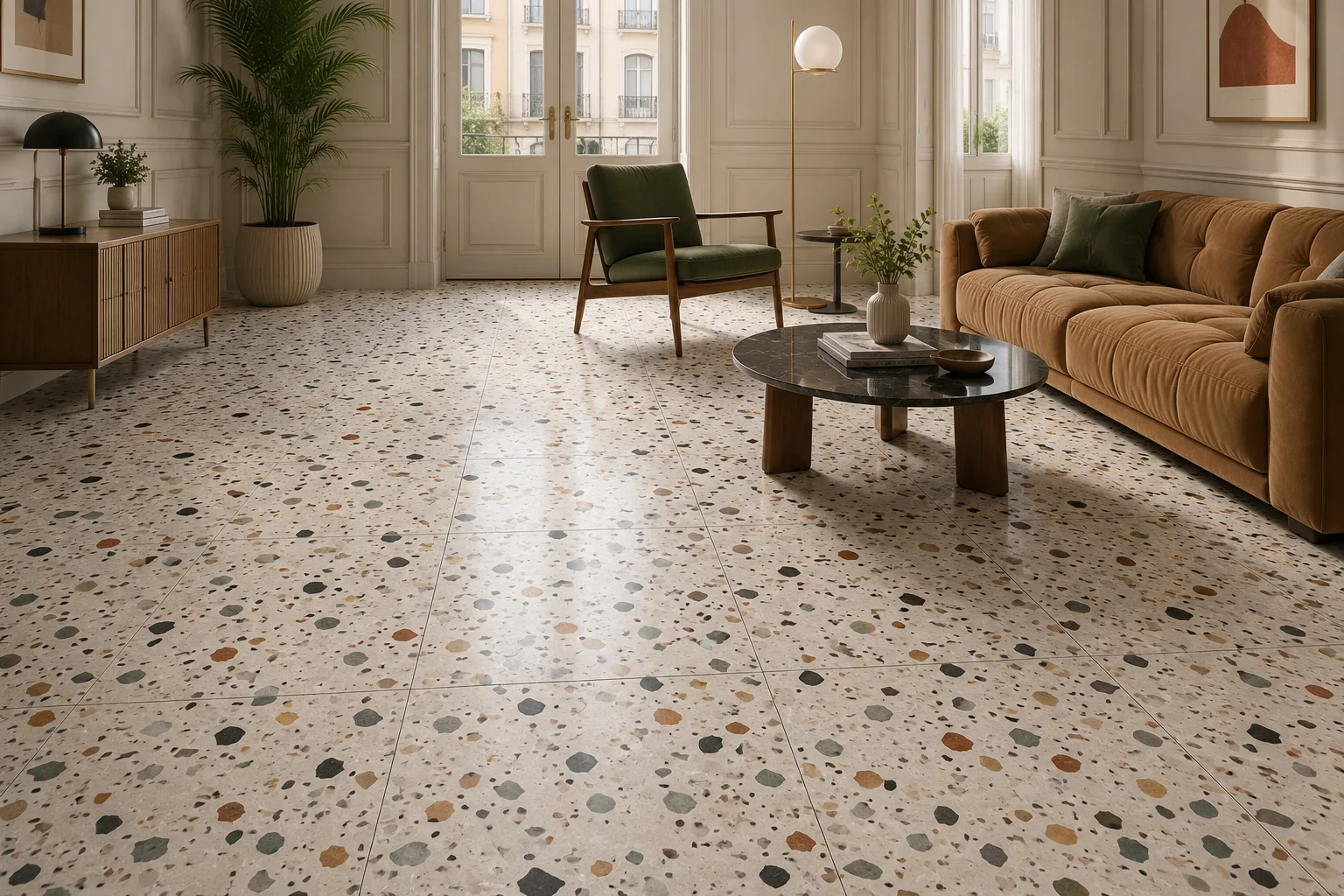
• Surface design: marble look, wood finish, stone finish, concrete finish, or a specific colour/collection reference.
• Calibration tolerance: typically ±0.5mm for premium product — specify this explicitly.
• Application: residential, commercial, hospitality, or infrastructure use, which determines the abrasion and load-bearing standard required.
• Target market standards: CE, ASTM, or ISO 13006, depending on your destination country.
5. Certifications and Quality Standards You Must Verify
Certifications are the contractual basis for market entry in most destination countries, not marketing collateral. Confirm which of the following apply to your specific product line and target market:
ISO 9001:2015 — quality management system; confirms documented production control and batch traceability.
ISO 13006 / EN 14411 — the international reference standard for ceramic tiles, used by most global importers.
CE Marking — required for entry into the European market.
ASTM Standards (C373, C485, C648, C1026) — covering water absorption, warpage, breaking strength, and frost resistance for North America.
REACH Compliance — European chemical regulation compliance for glazed and surface-treated tiles.
BIS — India's domestic standard, a useful baseline indicator even for export-focused manufacturers.
Always request the certificate number and verify it directly with the issuing body's registry rather than accepting a printed certificate at face value.
6. MOQ, Pricing, and Payment Terms
Minimum order quantities for standard catalogue product typically start at one FCL — approximately 18–22 tonnes depending on tile size and packaging. Larger manufacturers may offer flexibility on MOQ for trial orders from new buyers, particularly where a longer-term relationship is being developed.
Pricing is generally quoted in USD on an FOB (Free on Board) or CIF (Cost, Insurance, Freight) basis — confirm which Incoterm applies to every quotation you receive, since comparing an FOB quote against a CIF quote without adjustment will produce a misleading price comparison.
Standard payment terms for new export relationships are 30% advance against the proforma invoice, with the balance due against shipping documents. Established buyers with a longer trading history may be able to negotiate letter of credit (LC) terms.
Treat quotations that sit well below the going market rate with caution. Unusually low prices typically point to reduced vitrification density, wider calibration tolerances, unverified certifications, or a trader quoting on a manufacturer's product without an actual supply agreement in place.
7. Shipping, Incoterms, and Logistics Explained
Understanding Incoterms is essential to knowing exactly what you are paying for and where risk transfers from seller to buyer.
FOB (Free on Board): the manufacturer's responsibility ends once goods are loaded onto the vessel at the Indian port (commonly Mundra or Kandla). You arrange and pay for ocean freight, insurance, and destination charges.
CIF (Cost, Insurance, Freight): the manufacturer arranges and pays for freight and insurance to your destination port, simplifying logistics for first-time importers.
Standard catalogue product typically ships within 15–30 days of order confirmation; custom OEM or large-format slab orders may need 45–60 days. Add 15–35 days of transit time depending on destination, plus customs clearance time at your end. Always get lead time commitments in writing, and build a realistic buffer into any construction project schedule that depends on the shipment.
Packaging quality directly affects your claim rate. Confirm corrugated box thickness, inner foam or bubble-wrap lining for polished surfaces, palletisation for FCL stability, and box-level labelling (product code, size, shade, batch number).
8. Import Documentation and Customs Clearance
A complete, accurate document set is the difference between a routine customs clearance and a container held at port accruing demurrage. For most markets, you will need:
• Commercial Invoice
• Packing List
• Bill of Lading (or Airway Bill for air freight)
• Certificate of Origin (standard, or Form A for GSP-eligible markets)
• Test Reports / Material Safety Data Sheet, where required by your market
• Phytosanitary Certificate, where wooden pallets are used
At your end, work with a licensed customs broker who is familiar with the HS code classification for ceramic and porcelain tiles and with your country's specific duty and compliance requirements. Confirm with your manufacturer's export team that they are experienced in preparing documentation for your specific destination market — this single factor accounts for a large share of avoidable customs delays.
9. Calculating True Landed Cost
The FOB or CIF quotation is only the starting point. Your true landed cost — the figure that actually determines your margin — includes:
• FOB/CIF product cost
• Ocean freight (if buying FOB)
• Marine insurance
• Destination port handling and terminal charges
• Import duty and applicable taxes (e.g., VAT/GST in your market)
• Customs clearance and broker fees
• Inland transportation to your warehouse or site
• Breakage or shortage allowance, typically built in as a contingency percentage
Construction companies and distributors budgeting a project should calculate landed cost per square metre, not per container, since this is the figure that compares meaningfully against local or alternative-origin product.
10. Common Risks and How to Avoid Them
Buying through an agent with no factory access. Unless the agent has a demonstrated track record and contractual standing with the manufacturer, deal direct wherever the order size allows it.
Selecting on price alone. The lowest quotation from an unverified supplier frequently produces the highest total landed cost once quality failures and delays are factored in.
Not specifying shade and batch on the purchase order. Tiles are produced in shades and batches; a repeat order months later will not automatically match the first shipment unless this is documented and agreed.
Vague proforma invoices. Every specification — size, finish, thickness, shade, batch, Incoterm, packaging, and lead time — should be explicitly stated. A vague proforma invoice is an early warning sign, not a minor omission.
Underestimating lead times. Build production, loading, ocean transit, and customs clearance time into your project schedule realistically rather than optimistically.
Skipping a factory audit or sample order. For first orders, a video or physical factory audit and a production sample (not a display sample) are standard, inexpensive risk mitigation steps.
11. Why Morbi, Gujarat Is India's Tile Export Hub
Morbi is not simply a manufacturing location — it is a concentrated ecosystem. Within roughly 50 kilometres sits the world's highest density of ceramic and porcelain tile manufacturers, supported by raw material suppliers, kiln manufacturers, glaze producers, packaging suppliers, and freight forwarders, all specialising in tile.
For importers, this concentration means competitive pricing driven by manufacturer density, proximity to Gujarat's kaolin and feldspar deposits, access to the latest European kiln and digital glazing technology, and mature freight lanes directly to Mundra and Kandla ports. A single sourcing visit to Morbi can realistically cover twenty to thirty manufacturer evaluations in three to four days — a level of efficiency that is difficult to match anywhere else in the world.
12. Working with Probity Ceramic LLP: What Sets Us Apart
Probity Ceramic LLP is a premium porcelain tile manufacturer and exporter based in Morbi, Gujarat, built specifically around the needs of importers, distributors, and construction companies managing bulk, repeat, and project-scale orders.
Our manufacturing capability covers:
• Porcelain tiles and full-body slabs from 300×600mm to 1200×2400mm and 800×3000mm
• GVT, PGVT, Double Charge Vitrified Tiles, Outdoor and Parking Tiles
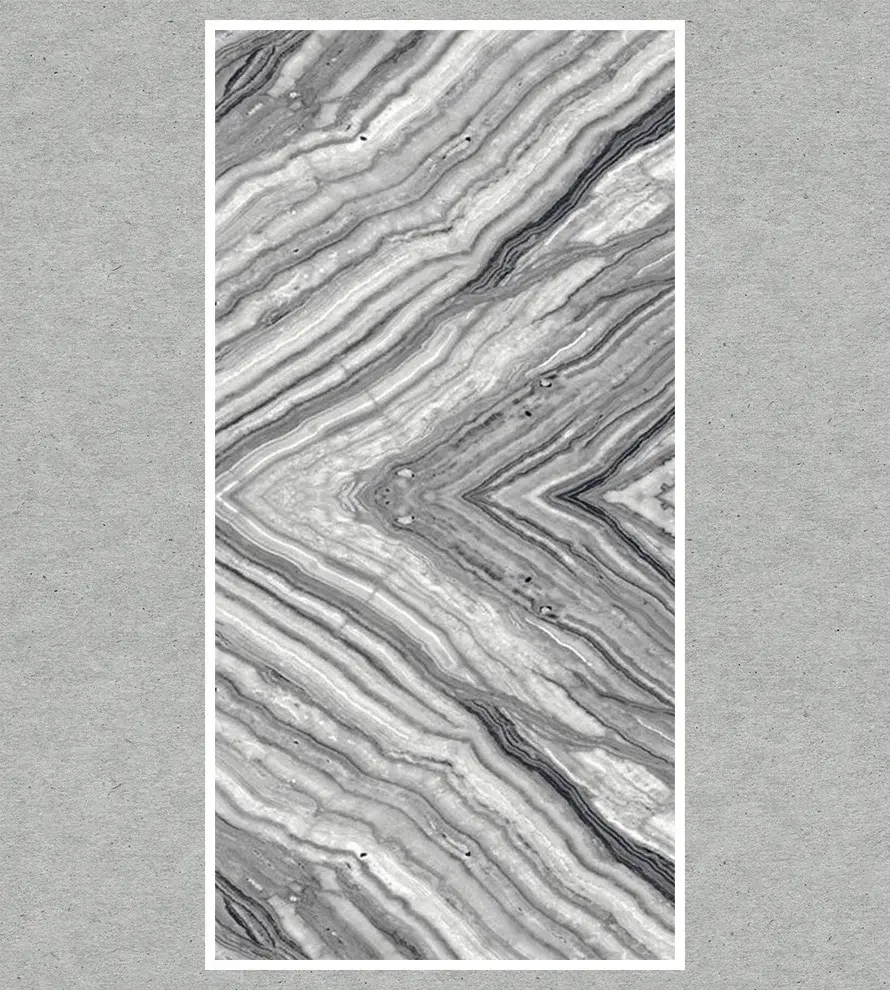
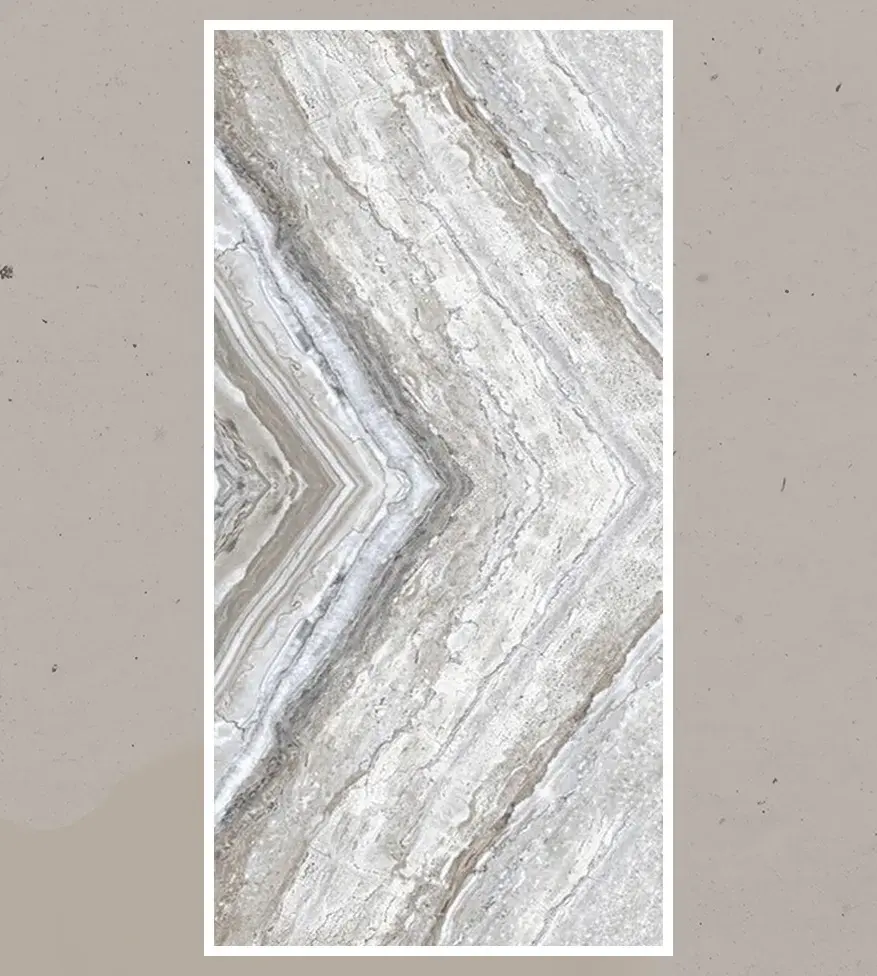
• Premium collections including Calacatta, Statuario, Carrara, Onyx, Wood Finish, Marble Look, Stone Finish, and Concrete Finish
• OEM and Private Label manufacturing for regional distributors and retail chains
• Programme supply for residential, commercial, hospitality, and infrastructure projects
What importers and project buyers consistently tell us:
Shade consistency across shipments, dependable lead time delivery, and an export documentation team that understands the compliance requirements of the GCC, EU, West Africa, and beyond are the non-negotiables our operation is built around.
We work with:
Importers placing first container orders with a development roadmap, distributors expanding or replacing their Indian supply source, construction and project companies requiring phased programme supply across multiple product categories, and retail chains developing private label collections.
We offer factory audits, production samples, and technical data sheets on request. Our export team is available to walk through specification, MOQ, pricing, and supply structure directly.
Conclusion
Importing tiles from India is a well-worn process — but it rewards buyers who treat it as a process rather than a single transaction. Defining your specification precisely, verifying who you are actually buying from, understanding Incoterms and true landed cost, and building documentation and lead time discipline into your plan are what separate a smooth, repeatable supply chain from one that generates disputes and delays.
India's tile manufacturing sector, anchored in Morbi, has the depth, technology, and export experience to serve importers, distributors, and construction companies at any scale. The task is applying the right process to find and work with the manufacturers capable of delivering on it consistently.
Related Articles

The Complete Guide to Import Tiles from India
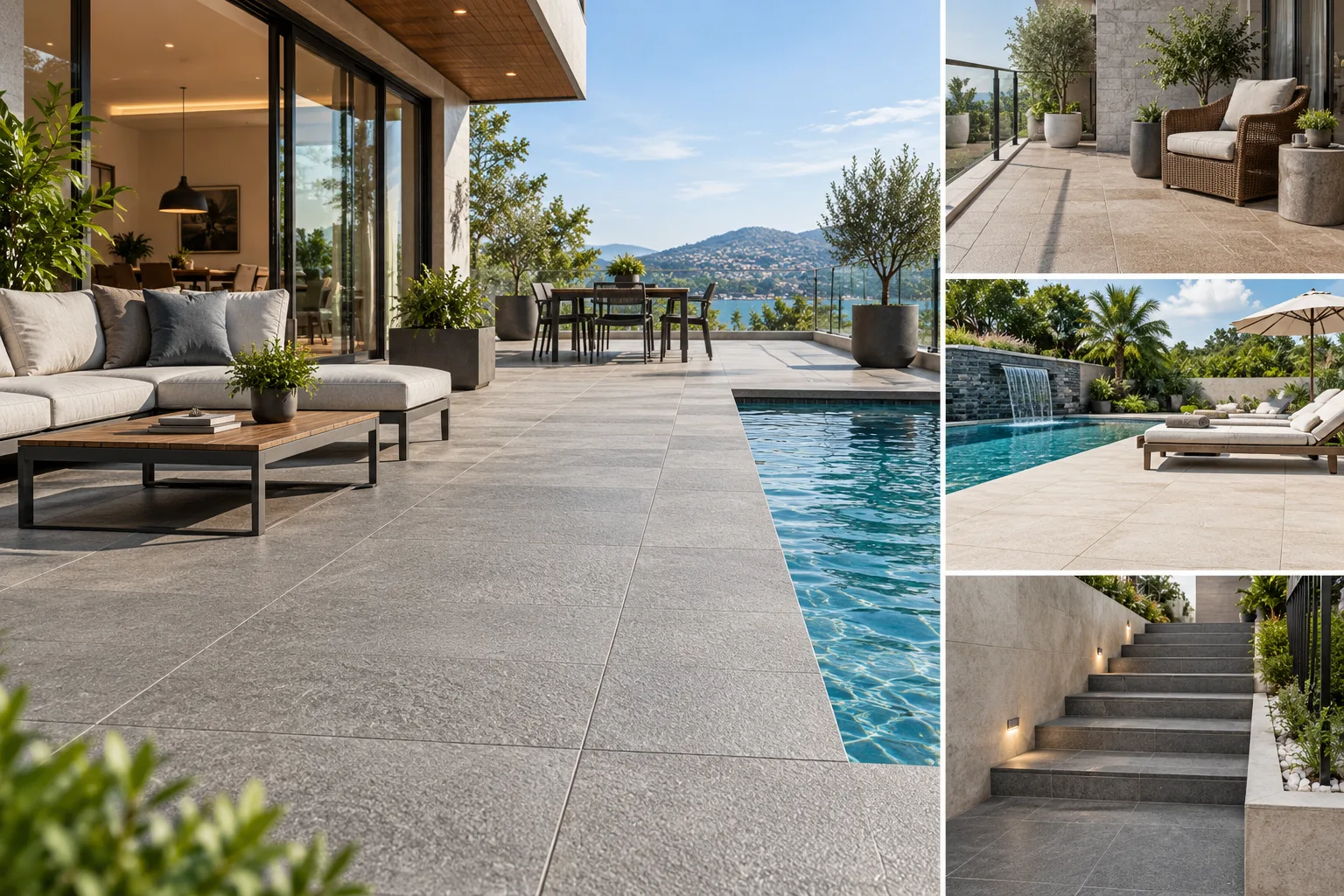
Best Anti-Slip Outdoor Tiles for Patios, Balconies & Pool Areas